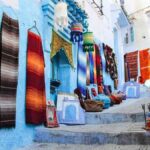


Planning your first visit to the Marrakech souks? These bustling markets fill the old medina with color, noise, and the smell of spices—and they’re one of the very best things to do in Marrakech. The souks are a maze of covered alleys just off Jemaa el-Fna Square, where you’ll find carpets, leather bags, lanterns, spices, ceramics, jewellery and much more, usually open from late morning until evening.
In this Marrakech souks guide, you’ll learn what the souks are, where to find the main markets, what to buy, how to bargain politely, how to avoid common tourist traps, and when it’s worth booking a guided souk tour. Along the way, we’ll share local tips and hidden corners that most first-time visitors miss.
Visiting the souks is one of the essential things to do in Marrakech—but a little preparation goes a long way.
Table of contents
- Marrakech Souks at a Glance
- Why Trust This Marrakech Souks Guide?
- What Are the Marrakech Souks?
- A Short History of the Marrakech Souks
- Layout of the Marrakech Souks
- Famous Souks and Markets in Marrakech
- Atmosphere of the Marrakech Souks
- How to Find & Navigate the Marrakech Souks
- What to Buy in the Marrakech Souks
- How to Bargain in the Marrakech Souks (Step-by-Step)
- Traditional Moroccan Handicrafts
- Food Markets in the Souks
- Hidden Gems in the Marrakech Souks
- Shopping Etiquette in the Marrakech Souks
- Best Time to Visit the Marrakech Souks
- How to Avoid Tourist Traps in the Marrakech Markets
- Guided vs Independent: Should You Book a Souk Tour?
- Practical Tips for First-Time Visitors
- Souks Beyond Marrakech
- Cultural Experiences in the Souks
- Marrakech Souks at Night
- FAQs
Marrakech Souks at a Glance
If you just want the essentials, here’s a quick overview of how the Marrakech souks work in practice:
- Main areas: Souk Semmarine, Souk el Attarine, Souk Cherratin, Souk Sebbaghine, Souk Zrabi, plus the gateway of Jemaa el-Fna.
- Location: Inside the walled medina, immediately north of Jemaa el-Fna Square.
- Typical hours: Roughly 10:00–20:00, with many stalls reopening after sunset prayer; hours vary by season and individual shop.
- Best time to visit:
- 10:00–12:00 for calmer browsing and cooler temperatures
- Late afternoon / early evening for atmosphere and local shoppers
- Must-buy items: Spices, teas, leather bags and babouches, brass lanterns, handwoven rugs, ceramics, argan oil, and traditional beauty products.
- Bargaining range: Expect to negotiate around 30–50% off the first price in non-fixed-price shops, depending on quality and how you negotiate.
- Who it suits: First-time visitors, photographers, keen shoppers, families with older kids, and anyone curious about Moroccan daily life.
Why Trust This Marrakech Souks Guide?
This guide is written by Marrakech Desert Trips, a Marrakech-based tour company that has spent years guiding visitors through the medina and its souks. Every day, our local guides help travellers navigate the markets, negotiate fair prices, and discover quieter artisan quarters that most people never find on their own.
We don’t just visit the souks once in a while on holiday—we work here, shop here, and build long-term relationships with the artisans you’ll meet. The tips below are based on that real-world experience, not just a quick visit, and on feedback from thousands of guests we’ve accompanied in Marrakech.
If you’re planning a longer itinerary that goes beyond Marrakech, our complete Morocco travel guide is a good place to start for visas, money, transport and route ideas.
What Are the Marrakech Souks?
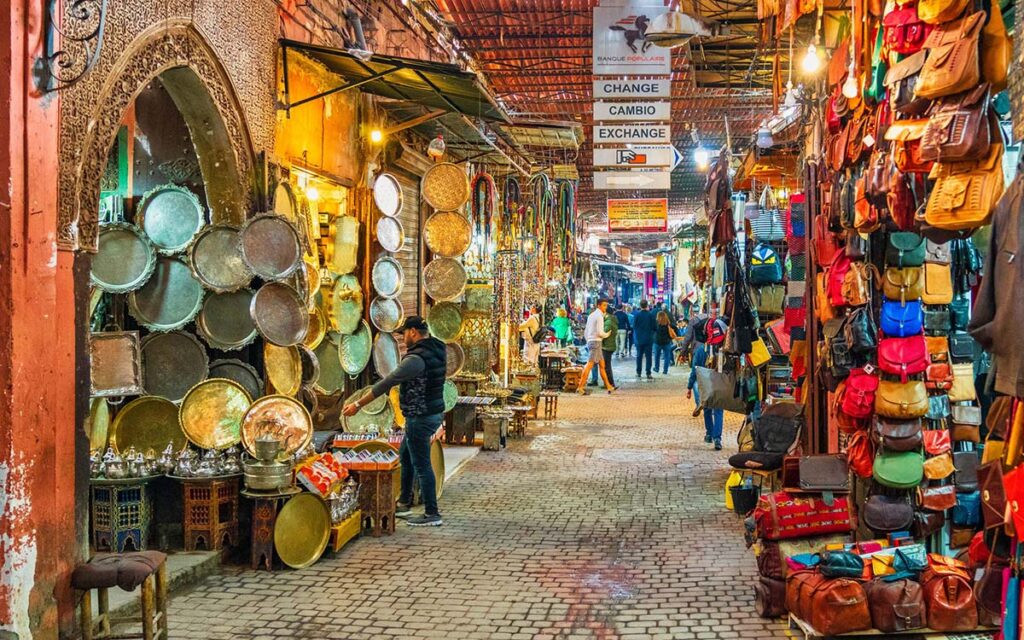
In simple terms, the Marrakech souks are the traditional markets inside the old walled city (medina), where locals and visitors buy everything from spices and lanterns to everyday hardware.
The Marrakech souks are a network of interconnected markets dating back to the 11th century. For centuries they were the beating heart of trade in North Africa, and even today the area still feels like an open-air department store—just far more atmospheric.
As you wander, you’ll see:
- Stalls overflowing with spices and woven baskets
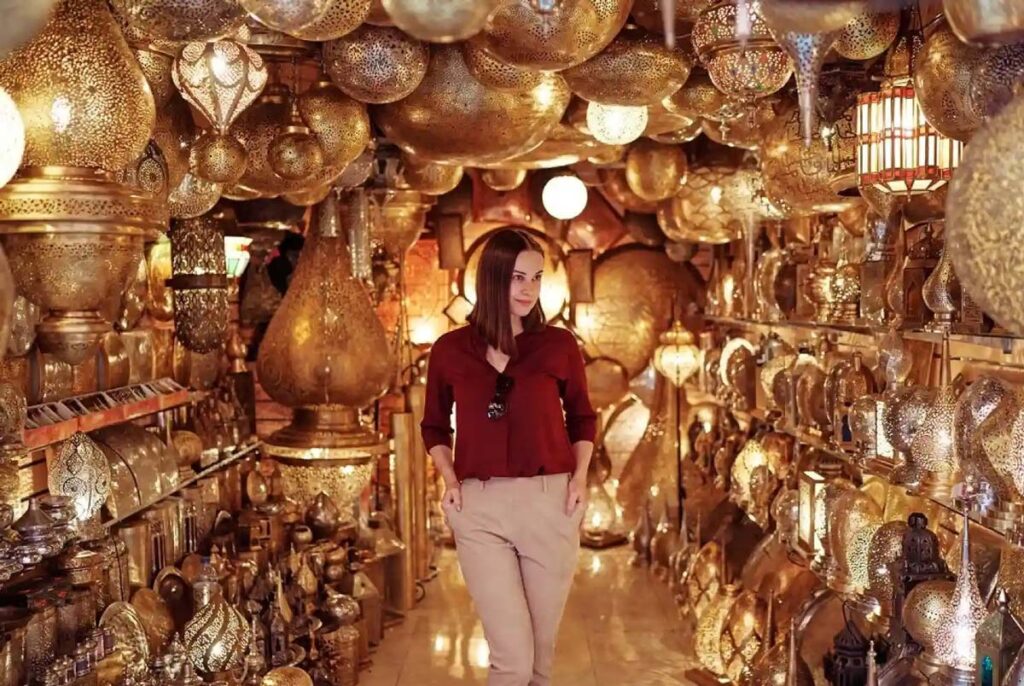
- Rows of brass lanterns and teapots
- Leather workshops and shoe stalls
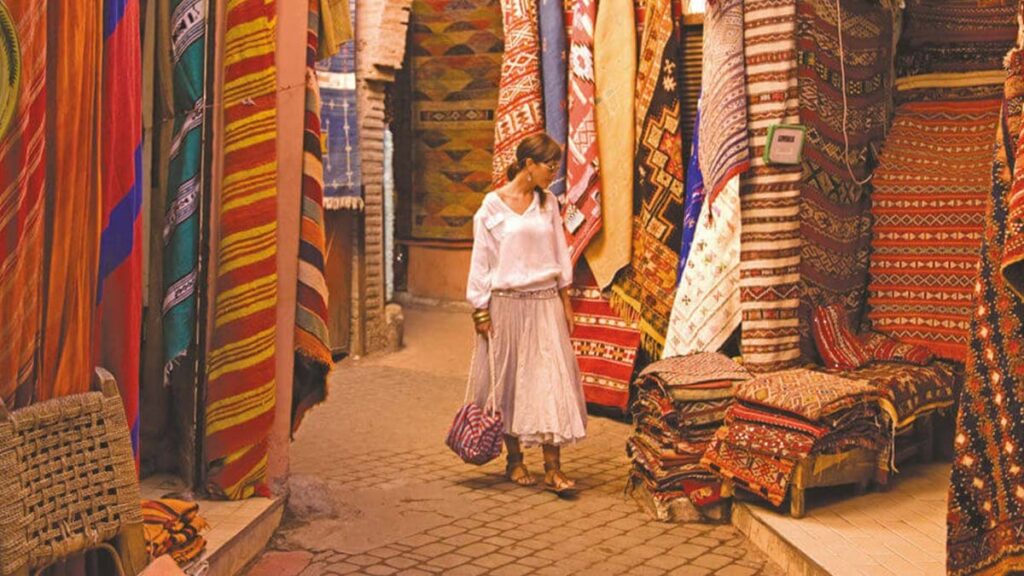
- Carpet shops with rugs rolled and stacked to the ceiling
- Jewellery stalls and even simple hardware stores for locals
Think of the souks as Marrakech’s shopping mall, but with narrow alleys, wooden roofs casting striped shadows, and the constant murmur of bargaining in Arabic, French, and English.
A Short History of the Marrakech Souks
The Marrakech souks grew where caravan routes, crafts, and commerce met, turning the city into a major trading hub between the Sahara, the Atlas Mountains, and the Mediterranean.
Founded by the Almoravids in the 11th century, Marrakech sat on key caravan routes linking sub-Saharan Africa with North Africa and Europe. Caravans brought gold, salt, ivory, and textiles from the south, while traders from the north introduced silks, spices, and luxury goods.
Over time, artisans organised themselves into guilds, each occupying a specific area of the medina. That’s why today you still find:
- Souk des Teinturiers – the dyers’ quarter
- Souk Haddadine – the blacksmiths’ souk
- Souk Sebbaghine – the dyers’ souk for textiles
As dynasties changed, the souks expanded, specialised, and grew denser, turning Marrakech into a centre of craftsmanship whose influence is still visible in the markets you’ll walk through today.
Layout of the Marrakech Souks
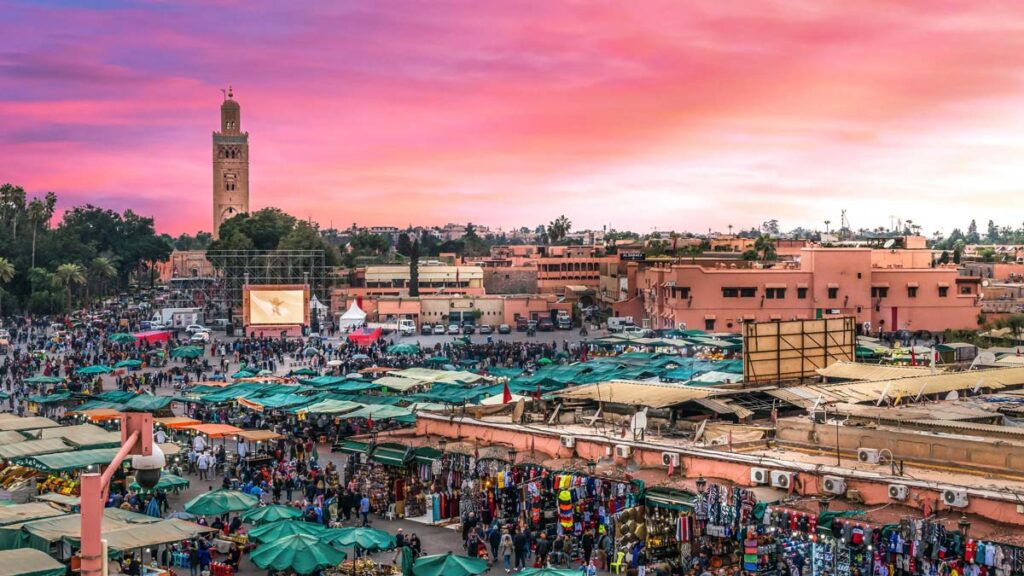
The souks feel like a maze at first, but they’re organised around a few main “spines” that run out from Jemaa el-Fna with more specialised alleys branching off.
Here’s the basic logic:
- Main arteries like Souk Semmarine run out from Jemaa el-Fna, acting as the “high streets” of the medina.
- Smaller side alleys branch off into specialised areas: carpets, spices, leather, metalwork, textiles, and more.
- Roofs vary from fully covered alleys to open-air lanes; this can help you recognise areas and orient yourself.
A good strategy for your first visit:
- Start at Jemaa el-Fna Square.
- Walk under the archways into Souk Semmarine.
- Drift to either side into smaller alleys, but note landmarks (a mosque, a café, or your riad’s name) to help you find your way back.
You won’t memorise the whole layout in a day—and you don’t need to. Just keep a mental map of a few key points you can return to.
Famous Souks and Markets in Marrakech
Most visitors start in Souk Semmarine and Jemaa el-Fna, then branch out into more specialised souks for carpets, leather, brassware, and textiles.
Souk Semmarine
One of the largest and most famous souks in Marrakech, Souk Semmarine is a bustling hub of activity. Stretching from the medina’s main entrance near Jemaa el-Fna, this lively market offers:
- Luxurious fabrics and ornate carpets
- Gleaming lanterns and metalwork
- Traditional jewellery and souvenirs
It’s the ideal place to get your first feel for the souks’ atmosphere.
Jemaa el-Fna Square
Although technically a square rather than a souk, Jemaa el-Fna is the gateway to the markets and the beating heart of Marrakech.
- By day: juice stands, herbalists, henna artists, and street food stalls.
- By night: performers, storytellers, musicians, and pop-up restaurants.
Other Notable Souks
You can spend hours exploring:
- Souk el Attarine – brassware, lamps, and perfumes
- Souk Cherratin – leather goods and bags
- Souk Zrabi – carpets and rugs
- Souk Sebbaghine – colourful dyed yarns and textiles
- Souk Haddadine – metalworkers and blacksmiths at their forges
- Souk el Khemis – a bit further out, known for second-hand goods and furniture
Each area has its own character, smells, and sounds—so take your time and wander.
Atmosphere of the Marrakech Souks
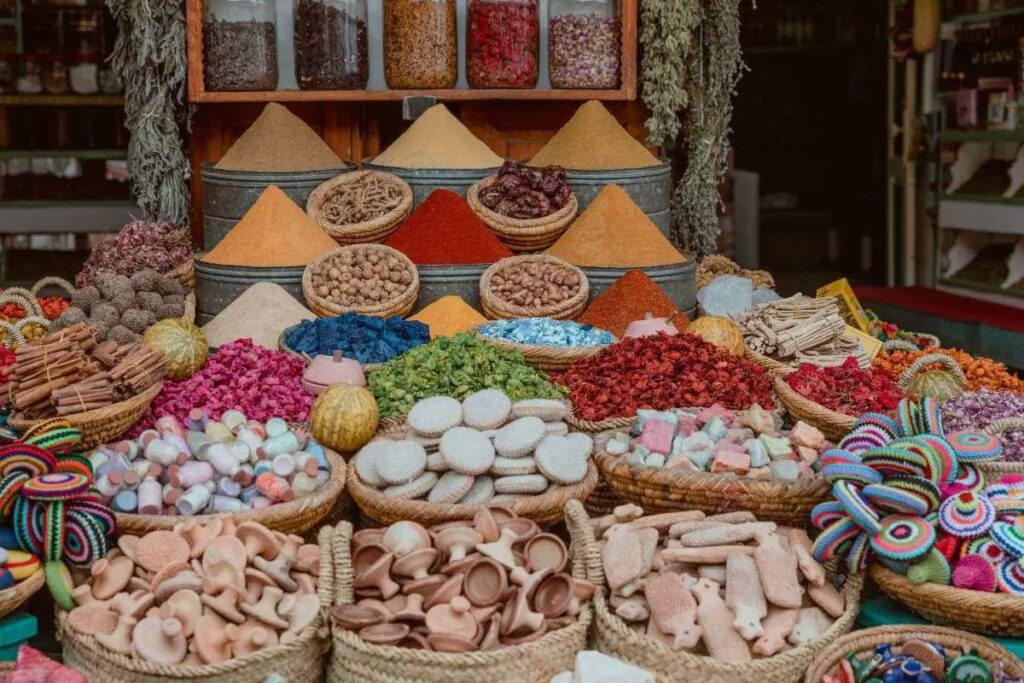
Expect a full-sensory experience: smells, colours, and sounds all competing for your attention in the best way.
Walking through the Marrakech souks, you’ll notice:
- The aroma of saffron, cinnamon, cumin, and freshly baked bread
- Colours exploding from piles of textiles, ceramics, and spices
- The call to prayer drifting over the rooftops
- The clink of metal from blacksmiths’ workshops
- The rhythm of bargaining between vendors and shoppers
Allow time simply to soak it all in. Even if you don’t buy anything, the atmosphere alone is worth the visit, especially on your first day in Marrakech.
How to Find & Navigate the Marrakech Souks
The easiest way to reach the souks is to walk into the medina from Jemaa el-Fna, then use offline maps, a few landmarks, and common sense to find your way around.
Getting There
The souks are centrally located inside the medina. Most visitors enter from Jemaa el-Fna Square:
- Walk under the archways into Souk Semmarine to start exploring.
- Taxis and ride-shares can drop you near Jemaa el-Fna or Koutoubia Mosque; from there, the medina is largely pedestrian.
- Traditional calèches (horse-drawn carriages) can bring you close to the medina edge, but you’ll still need to walk inside.
Navigation Tips
- Use offline maps: Save your riad or hotel location on Google Maps and download the area offline. GPS works surprisingly well in the medina.
- Look up: Signs often point towards major sites like Jemaa el-Fna, Koutoubia, or key gates.
- Ask the right people: If you feel lost, ask a stallholder or café worker for directions rather than touts who may insist on “guiding” you for a fee.
To make offline maps and data easy, you can pick up a local eSIM or prepaid card—see our guide to the best SIM card in Morocco for tourists for step-by-step advice.
What to Buy in the Marrakech Souks
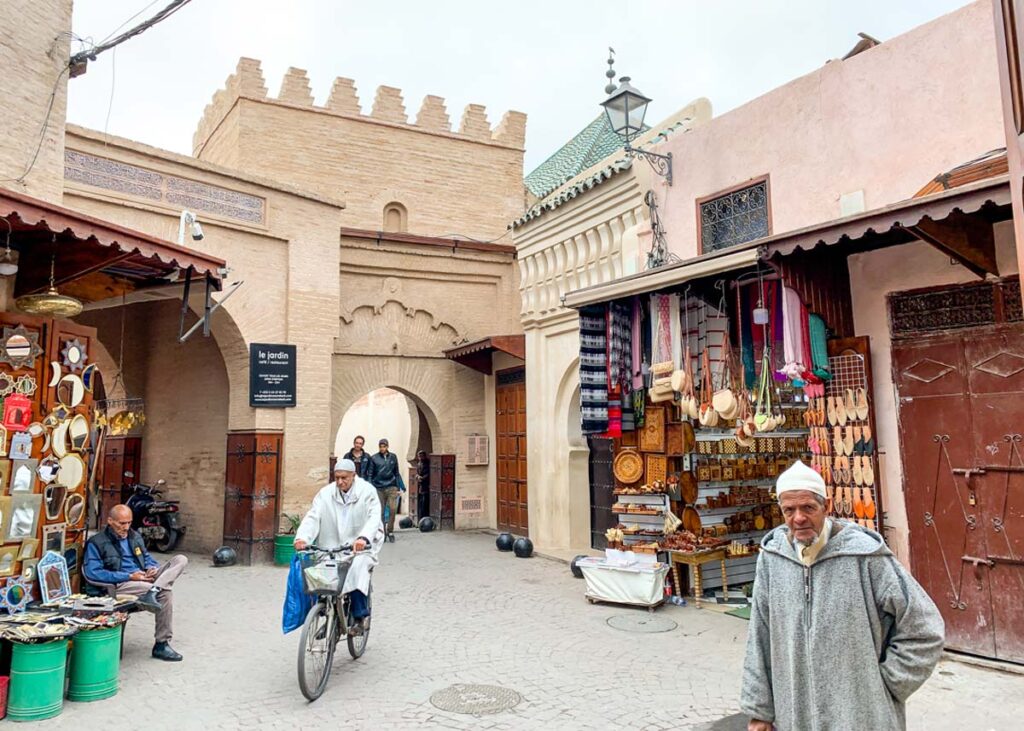
The classic Marrakech souvenirs are spices, leather goods, lanterns, ceramics, rugs, and beauty products like argan oil and black soap.
If you’re wondering what to take home, consider:
- Spices & teas – cumin, turmeric, ras el hanout, paprika, saffron, herbal blends.
- Leather goods – bags, belts, jackets, and traditional babouches (slippers).
- Lanterns & metalwork – brass or copper lamps that cast intricate patterns of light.
- Ceramics – hand-painted bowls, plates, tajines, and tiles.
- Carpets & rugs – Berber and Arab designs in wool or cotton, from small runners to room-size pieces.
- Beauty products – argan oil, black soap (savon noir), clay masks, kohl, and rose water.
If you’re unsure about prices, it’s fine to browse a few shops first to get a feeling for quality vs cost before making a big purchase.
How to Bargain in the Marrakech Souks (Step-by-Step)
A good rule of thumb is to start around 40–50% of the first price, stay friendly, and be ready to walk away if it doesn’t feel fair.
Bargaining is expected in the souks and can be fun when done respectfully. A simple approach:
- Ask the price with a smile.
- Start low but realistic. As a rough guide, offer around 50% of the first price.
- Increase gradually. Move up in small steps; there’s no need to jump straight to the vendor’s number.
- Keep it friendly. Laugh, smile, and avoid getting angry—it’s a social interaction as much as a transaction.
- Know when to walk away. If the price doesn’t feel right, thank the seller and move on. Often, they’ll call you back with a better offer.
- Pay in dirhams where possible. It keeps things simpler and can help you get a better deal.
Remember: the goal isn’t to “win” at all costs; it’s to reach a price that feels fair for both sides.
Traditional Moroccan Handicrafts
Almost every object you see in the souks has a craft tradition behind it—often passed down through generations.
Some examples:
- Dyers’ Souk (Souk Sebbaghine) – vibrant yarns and fabrics dyed using natural pigments.
- Carpet souks (like Souk Zrabi) – handwoven rugs made with techniques that families have passed down over centuries.
- Metal workshops (Souk Haddadine) – blacksmiths hammering lanterns, teapots, and decorative pieces by hand.
If you’re interested in craftsmanship, ask whether you can see where the items are made. Many artisans are proud to show off their workshops and explain their process.
Food Markets in the Souks
Food lovers will find as much to explore as shoppers, from olives and preserved lemons to fresh bread and street snacks.
Look for:
- Stalls piled high with olives, preserved lemons, dates, and nuts
- Freshly baked khobz (round Moroccan bread) straight from communal ovens
- Tiny stands selling mint tea, msemen (Moroccan pancakes) and sweet pastries
You can snack on the go or take a break in a café overlooking the alleys, watching the world go by with a glass of mint tea.
Hidden Gems in the Marrakech Souks
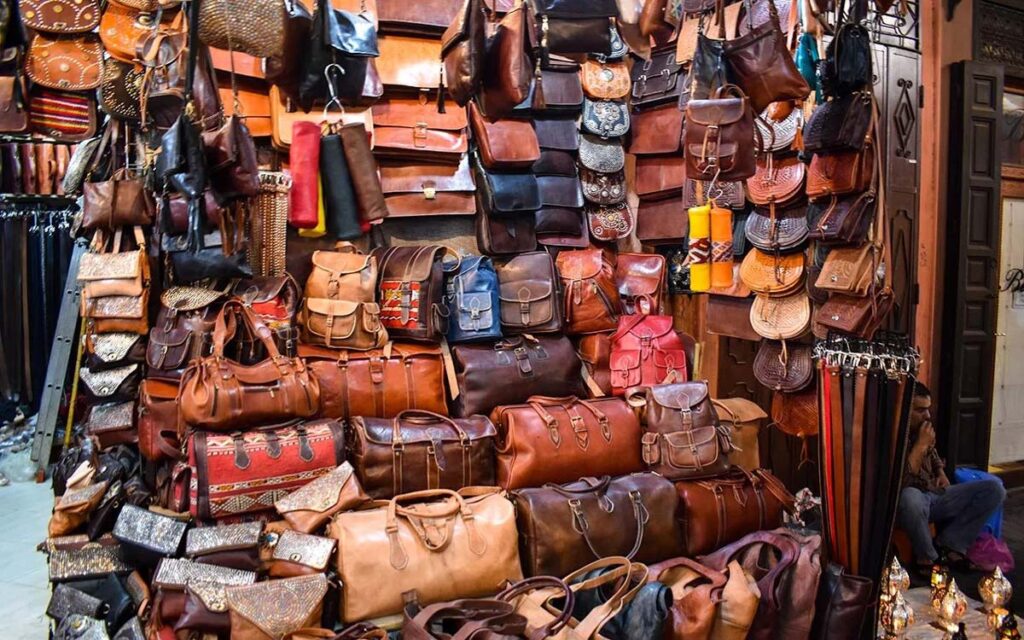
The best finds often sit just a few steps away from the busiest aisles.
Beyond the main arteries, you’ll discover:
- Quiet antique shops stacked with old doors, chests, and Berber jewellery
- Secluded riads with courtyard cafés and rooftop terraces
- Small workshops where artisans carve wood, engrave metal, or paint ceramics by hand
Don’t be afraid to duck down a side alley. As long as you keep an eye on your general direction back to Jemaa el-Fna, getting a little “lost” is part of the fun.
Shopping Etiquette in the Marrakech Souks
A few simple gestures—like greeting vendors and asking permission for photos—go a long way to keeping interactions warm.
To keep things positive:
- Greet vendors with a friendly “salaam alaikum” or “bonjour”.
- Ask permission before taking photos of people or their stalls.
- Avoid handling items roughly or trying on clothing without asking.
- If you agree on a price after bargaining, it’s polite to follow through and buy.
A bit of patience and respect will usually be returned with hospitality and better service.
Best Time to Visit the Marrakech Souks
The most comfortable times are mid-morning and late afternoon, when temperatures are milder and the atmosphere is at its best.
- Morning (around 10:00–12:00) – cooler, calmer, and ideal if you prefer a slower pace. Some stalls may open a bit later.
- Late afternoon to early evening – livelier, with more locals shopping after work and the light turning warm and golden.
- Midday – can be hot and crowded, especially in summer. If you come then, take regular breaks in shaded cafés.
- Fridays – some stalls may open later or close for the main midday prayer.
How to Avoid Tourist Traps in the Marrakech Markets
Most vendors are fair, but you should be cautious of unsolicited “guides,” high-pressure tactics, and prices that seem too good to be true.
Simple Rules
- Be wary of strangers insisting, “The way is closed, follow me, I’ll show you”—they usually expect a tip or will lead you to a specific shop.
- Avoid shops where you feel too much pressure to buy or where staff block the exit.
- For big purchases (like carpets), compare prices in several shops and don’t rush.
- Check quality carefully: look at stitching, seams, materials, and finishes rather than relying on labels.
- Trust your instincts. If something feels off, simply smile and walk away.
Guided vs Independent: Should You Book a Souk Tour?
You can explore the souks on your own, but a local guide can turn your first visit into a much smoother (and more insightful) experience.
When a Guided Souk Tour Helps
A guided souk tour is especially useful on your first day in Marrakech because:
- A local guide helps you navigate the maze and understand different artisan quarters.
- You get context and stories about the history, materials, and techniques behind what you’re seeing.
- Guides can help you avoid the pushiest stalls and steer you towards reputable artisans.
- They can assist with bargaining, making sure you pay a fair price without overpaying.
When to Go Independently
Once you’ve had an orientation walk (with a guide or on your own), wandering independently becomes much easier:
- If you’re mainly browsing and taking photos, a self-guided stroll is perfect.
- You can break your visit into shorter sessions across a couple of days rather than trying to see everything at once.
Practical Tips for First-Time Visitors
A little preparation before you go into the souks will make your visit more comfortable, safer, and more enjoyable.
Quick, practical hints:
- Cash: Carry small denominations of cash for easier bargaining and tips.
- Footwear: Wear comfortable closed shoes—you’ll walk on uneven cobblestones and sometimes dusty paths.
- Dress code: Dress modestly (shoulders and knees covered) to respect local customs and stay comfortable in the sun.
- Valuables: Keep valuables secure and avoid waving your phone or wallet around in crowded spots.
- Hydration: Stay hydrated and take breaks in nearby cafés or terraces.
- With kids: Plan shorter visits and combine the souks with a treat—like fresh juice on Jemaa el-Fna or a rooftop snack.
Once you’ve explored the medina, you can use the city as a base for day trips from Marrakech to the Atlas Mountains, Agafay Desert or Essaouira to balance the buzz of the souks with nature and fresh air.
Souks Beyond Marrakech
If you fall in love with the Marrakech souks, other Moroccan cities offer very different market experiences.
- Fez medina – deeper, older, and more traditional, with even more labyrinthine lanes and a strong focus on local life.
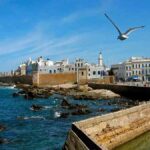
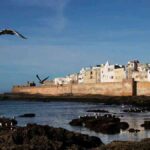
- Essaouira – coastal markets with a laid-back vibe, local art, handicrafts, and fresh seafood.
If the souks have given you a taste for adventure, you can continue into the Sahara with the
<a href=”https://www.marrakech-desert-trips.com/morocco-desert-tours/”>full collection of Morocco desert tours from Marrakech and Fes</a>,
including private and shared options.
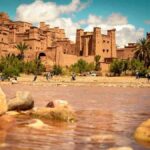
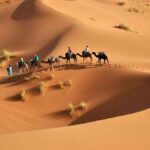
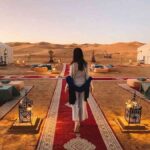
Many guests pair a couple of days in Marrakech and its souks with a private 3-day Sahara trip from Marrakech to the Erg Chebbi dunes, which combines kasbahs, valleys, and a night in a luxury desert camp.
If you’d rather explore more medinas and the Atlantic coast, an Essaouira day trip from Marrakech offers a relaxed fishing port, sea views, and easier-paced markets.
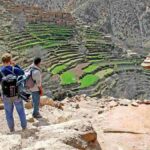
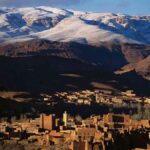
Nature lovers often escape to the hills on an Atlas Mountains day trip from Marrakech, visiting Berber villages and valley scenery as a refreshing contrast to the medina.
Cultural Experiences in the Souks
The souks are more than a place to shop—they’re a living stage for Moroccan culture.
You can:
- Listen to gnawa music and street performers in and around Jemaa el-Fna
- Sample home-style tajines and traditional sweets from small eateries
- Join a handicraft workshop (like pottery, cooking, or calligraphy) arranged through your riad or tour operator
These experiences help you connect with Morocco beyond souvenirs and create memories that last much longer than any shopping list.
Marrakech Souks at Night
At night, the souks feel more intimate while Jemaa el-Fna explodes into a loud, colourful open-air food court.
After sunset:
- Lanterns glow in the alleys, casting warm light on stalls and doorways.
- Some shops close, while others stay open late—especially around the main arteries and square.
- Jemaa el-Fna becomes a lively mix of food stalls, musicians, and storytellers.
Even if you prefer to shop by day, it’s worth returning in the evening to experience the atmosphere—just stick to busier, well-lit areas and keep your usual big-city awareness.
FAQs
What are the main souks in Marrakech?
The main souks in Marrakech include Souk Semmarine, Souk el Attarine, Souk Cherratin, Souk Sebbaghine, Souk Zrabi, and the lively Jemaa el-Fna Square at the entrance to the medina.
What is worth buying in Marrakech?
Popular items include spices, leather bags and babouches, lanterns, handwoven rugs, argan oil, ceramics, and traditional beauty products like black soap and clay masks.
What is the famous market in Marrakech?
Jemaa el-Fna Square is Marrakech’s most famous market area, known for its food stalls, juice stands, storytellers, musicians, and snake charmers, as well as being the gateway to the souks.
What should I wear in the Marrakech souks?
Wear modest, lightweight clothing (covering shoulders and knees) plus comfortable closed shoes. A hat and sunglasses are useful in sunny weather, especially around midday.
What is the difference between a souk and a medina?
The medina is the old walled city. The souks are the markets located inside the medina—mainly around Jemaa el-Fna and radiating out into the side streets.
How do you pay for things in the Marrakech souks?
Cash in Moroccan dirhams (MAD) is preferred. Some shops accept cards for larger purchases, but you shouldn’t rely on it. Always carry some smaller notes and coins for bargaining and tips.
Are the Marrakech souks safe?
Yes, the souks are generally safe and busy, even for solo travellers. As in any crowded place, keep an eye on your belongings, avoid dark empty alleys late at night, and ignore overly pushy touts.
What time do the Marrakech souks open and close?
Most shops open late morning (around 10:00) and stay open until early evening, with many reopening after the sunset prayer. Exact times vary by season, day of the week, and the individual stall.