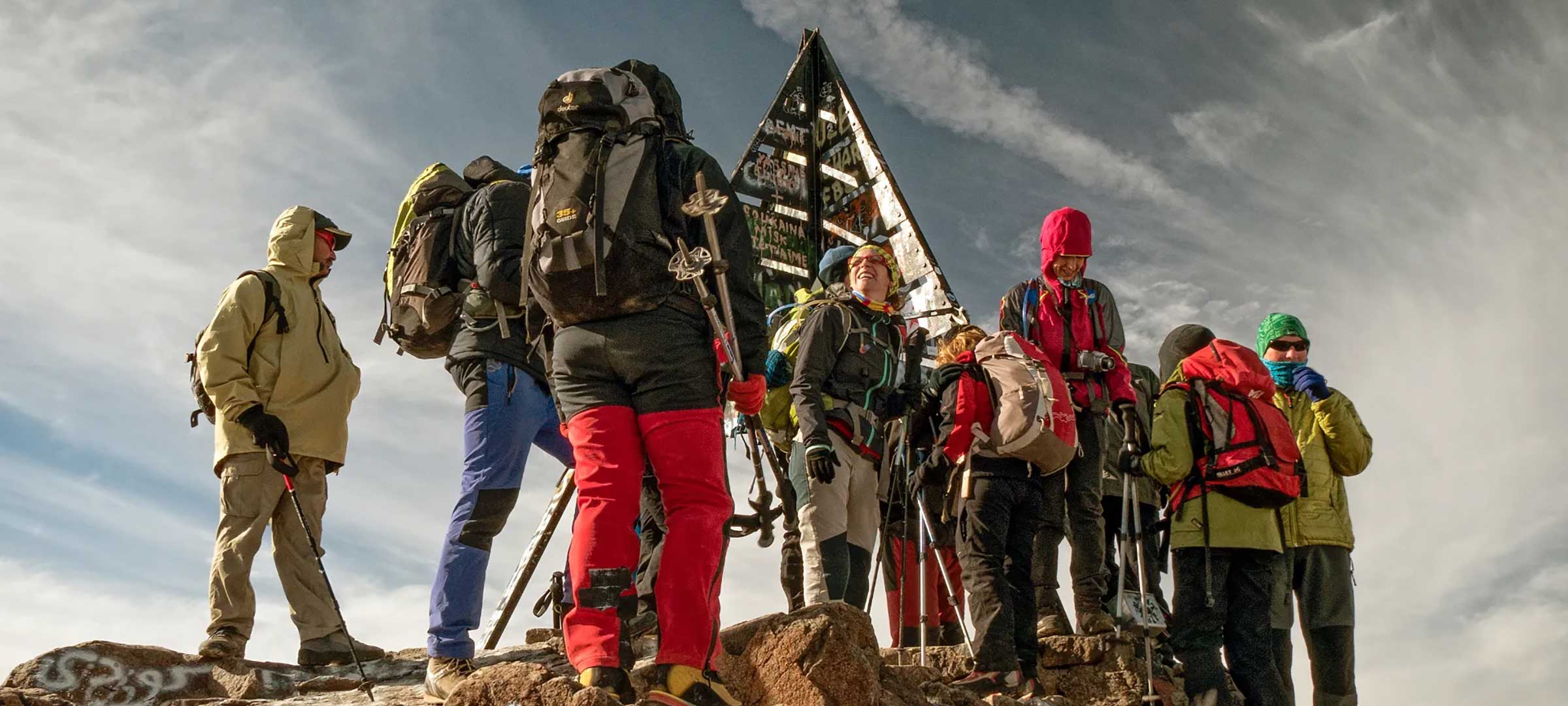
Mount Toubkal Trek 2 Days
Two days, one summit, and a dawn you'll never forget. Walk out of the Berber village of Imlil through walnut groves and terraced fields, sleep in a stone refuge at 3,207 metres, and set off by headtorch for the top of Mount Toubkal — 4,167 metres, the highest point in North Africa, with the Sahara on one horizon and the Marrakech plain on the other as the sun comes up. Non-technical, genuinely challenging, and done properly: licensed mountain guide, mules for your bag, refuge night, every meal. From €125/person.
Stand on the roof of North Africa in a single weekend on the 2-day Mount Toubkal trek — from Marrakech into the heart of the Atlas Mountains to summit North Africa's highest peak at 4,167m. Day 1: drive to Imlil (1,740m) in Toubkal National Park, trek 5–6 hours through the Ait Mizane Valley to the Toubkal Refuge (3,207m) — dormitory overnight. Day 2: pre-dawn summit push (3–4 hours up), 360° views from the top, descend to Imlil (9–11 hours total), drive to Marrakech. Challenging but non-technical — good fitness required, no mountaineering experience needed. Includes licensed mountain guide, mule support, all meals, and refuge overnight. From €125/person. 816 reviews · 4.8 stars. The classic ascent among our Atlas Mountains treks.
Difficulty: Challenging · Non-Technical · Good Fitness Required
This is a demanding mountain trek, not a casual hike. Day 2 involves 9–11 hours of walking with a pre-dawn start at altitude. However, it requires no ropes, ladders, or mountaineering skills — it's hiking on rocky terrain. If you can comfortably hike 15+ km with significant elevation gain in a day, you'll manage Toubkal. In winter (Nov–Apr), crampons and ice axe are required.
At a Glance
Tour Highlights
The Summit — 4,167 Metres
Stand on the highest point in North Africa at dawn, with the Sahara on one horizon and the Marrakech plain on the other — 360° views that justify every step of the climb.
DAY 2Headtorch Start into the South Cirque
Leave the refuge at 5:30 AM in the dark and climb the scree and boulders of the south cirque as the sky turns grey, then gold — three to four hours to the ridge.
PRE-DAWNBerber Villages of the Ait Mizane
Walk out of Imlil through terraced fields and walnut groves, past the stone houses of Aremd and the whitewashed shrine of Sidi Chamharouch beside its waterfall.
DAY 1A Night at the Toubkal Refuge
Sleep at 3,207 metres in a stone mountain hut — dormitory beds, your sleeping bags, a hot dinner from your cook — the overnight that makes a two-day summit possible.
NIGHT 1Licensed Guide & Mule Team
A bilingual mountain guide who knows the route in every season, checks your gear in Imlil, and sets the pace for the altitude — with mules carrying your luggage.
INCLUDEDWinter Ascent on Snow
From November to April the upper mountain is a different world — crampons and ice axe, packed snow, -20°C on top, and the Atlas white to the horizon.
CRAMPONSPhoto Gallery


Day by Day
Two days from Marrakech to the summit of Toubkal, starting at Imlil. Berber villages, the Sidi Chamharouch shrine, a night at the high refuge, a pre-dawn ascent, and 4,167m — the roof of North Africa.
Early morning pickup from your Marrakech hotel. A scenic ~1.5 hour drive south through the Haouz Plain and Asni village into the High Atlas to Imlil (1,740m) — the gateway to Toubkal National Park. Meet your licensed mountain guide and the mule team who'll carry your main luggage. Before setting off, your guide checks your hiking gear for the season — boots, layers, and in winter crampons and an ice axe — and, if anything is missing, helps you rent it from the Imlil shops.
Set off on foot through the Ait Mizane Valley — terraced fields, walnut groves, and Berber villages clinging to the hillside. Pass through Aremd village, cross the river, and climb to the shrine of Sidi Chamharouch (2,310m) — a pilgrimage site beside a waterfall. Picnic lunch here with stunning valley views.
Continue the steep ascent through rocky terrain, gaining altitude steadily. Arrive at the Toubkal Refuge (3,207m) — either Les Mouflons or Club Alpin depending on availability. Dormitory accommodation. Dinner is served at the refuge — hearty mountain food to fuel tomorrow's summit push. Rest well — you'll need it.
5:30 AM breakfast, then set off in pre-dawn darkness. The route follows the south cirque — crossing a stream above the refuge, then ascending through scree fields and boulder terrain. The walking is straightforward but the altitude and loose rock make it demanding. In winter, crampons and ice axe are used on packed snow and ice. After 3–4 hours of steady climbing, you crest the ridge and reach the summit plateau.
You're at 4,167 metres — the highest point in North Africa. The iconic triangular summit marker stands before you. 360° views in every direction: the Marrakech plain and the High Atlas stretching north, the Anti-Atlas and the edge of the Sahara to the south, snow-capped ridges east and west. Spend ~45 minutes on top — photos, absorb the views, celebrate. In winter, keep camera time brief — batteries drain fast in cold.
Descend back to the refuge for lunch, then continue all the way down to Imlil — retracing the route past Sidi Chamarouch and through the valley. The descent is long but the sense of accomplishment carries you. At Imlil, your driver is waiting for the transfer back to Marrakech — arriving early evening. Trek complete.
Summer vs Winter
Summer / Dry Season
Best conditions for most trekkers. Dry trails, warm days (15–25°C at refuge level), cool nights (0–5°C). No snow above the refuge (usually). Standard hiking boots and layered clothing sufficient. The trail is at its most accessible — rocky but clear. Long daylight hours. Most popular season — book early. For month-by-month conditions across Morocco, see our guide to the best time to visit Morocco.
Winter / Snow Season
A different mountain entirely. Snow covers the upper route from ~2,800m. Crampons and ice axe mandatory (rentable in Imlil, ~€5/day each — your guide checks your kit before you set off). Temperatures can drop to -20°C at altitude. The ascent is steeper on packed snow — shorter route but harder work. Availability may be limited depending on weather and trail conditions. Beautiful but demanding — only for those comfortable in snow.
Tour Pricing
Price per person decreases as your group size increases.
| Participants | 1 | 2 | 3 | 4 | 5 | 6 | 7–9 | 10–13 | 14–17 |
|---|---|---|---|---|---|---|---|---|---|
| Price / person | 360€ | 220€ | 180€ | 160€ | 150€ | 140€ | 135€ | 130€ | 125€ |
Prices verified March 2026 · +212 615 346 108
Inclusions & Exclusions
✓ Included in Your Tour
- Round-trip transfer Marrakech ↔ Imlil (A/C)
- Licensed bilingual mountain guide
- Mule support for luggage
- Overnight at Toubkal Refuge (dormitory)
- All meals (Day 1 lunch + dinner, Day 2 breakfast + lunch)
- Mineral water on trek
Not Included
- Personal hiking gear (rentable in Imlil)
- Winter equipment — crampons & ice axe (rentable ~€5/day each)
- Personal expenses & snacks
- Tips for guide & mule team (optional)
- Travel insurance (recommended)
Know Before You Go
Gear Check in Imlil
Your guide inspects boots, layers, and winter kit before the walk starts and helps you rent anything missing from the Imlil shops — crampons and ice axe at about €5 a day each.
Altitude
The summit is 4,167m and the refuge 3,207m; most people feel the thin air above 3,500m. Drink constantly, eat even without appetite, walk slower than feels natural — your guide watches for the signs.
The Refuge Night
Shared dormitories, blankets, basic washing facilities, and a hot dinner from your cook. Sleep is light at altitude; earplugs and a sleeping-bag liner help. It's one short night, and it makes the summit possible.
Summit Morning Timing
Breakfast at 5:30 AM, on the trail by 6, the summit around 9–10, lunch back at the refuge, Imlil by late afternoon, Marrakech by early evening — 9 to 11 hours of walking in all.
Winter Conditions
November to April means snow above 2,800m, crampons and an ice axe, and summit temperatures that can reach -20°C. We assess conditions before every departure and reschedule rather than risk it.
Best Season
May–June and September–October give dry trails and clear summits. July–August is hot in the valley but fine up high with an early start; winter is a snow climb, beautiful and demanding.
What to Carry
Mules take your main bag to the refuge; you walk with a daypack — water, snacks, sun protection, a warm layer, your headlamp and camera. Keep it under 5 kg; everything else rides the mule.
Water & Food
All four meals are included, cooked fresh at the refuge and on the trail, and we supply mineral water. Trailside stalls at Sidi Chamharouch sell drinks and oranges if you want extras — bring small change.
Traveller Reviews
816 verified reviews
"We had an incredible experience! Our guide Mohamed was fantastic and Ali, our chef, did an outstanding job preparing breakfast, lunch, and dinner along with tea. The trek was challenging but so rewarding. Standing on the summit at dawn with the entire Atlas spread out below us — I'll never forget that moment."
"I always felt safe thanks to our incredible guide Moustfa. He was professional, encouraging, and very experienced. Even though the weather turned bad, we kept going and he made sure we were comfortable and safe at all times. Summit day was tough but the views from 4,167m made every step worthwhile."
"Great experience! The guides were very good. Plenty of places to buy food and water. The food provided was also excellent — honestly some of the best meals we had in Morocco, cooked fresh on the mountain. The refuge is basic but comfortable. Summit morning was magical. Highly recommend."
"Thoroughly enjoyed this trek. Our guide ensured we had the necessary equipment and safety was a top priority, especially with recent snowfall. The ascent was challenging — don't underestimate it — but with a good guide it's absolutely achievable. The views from the summit are genuinely breathtaking."
"My first big mountain and what an introduction! The 2-day format is intense but doable if you're reasonably fit. Day 2 is long — be prepared for 10+ hours. But our guide paced us perfectly. The Berber villages on the approach, the shrine at Sidi Chamarouch, the refuge dinner, the pre-dawn summit — every part was memorable."