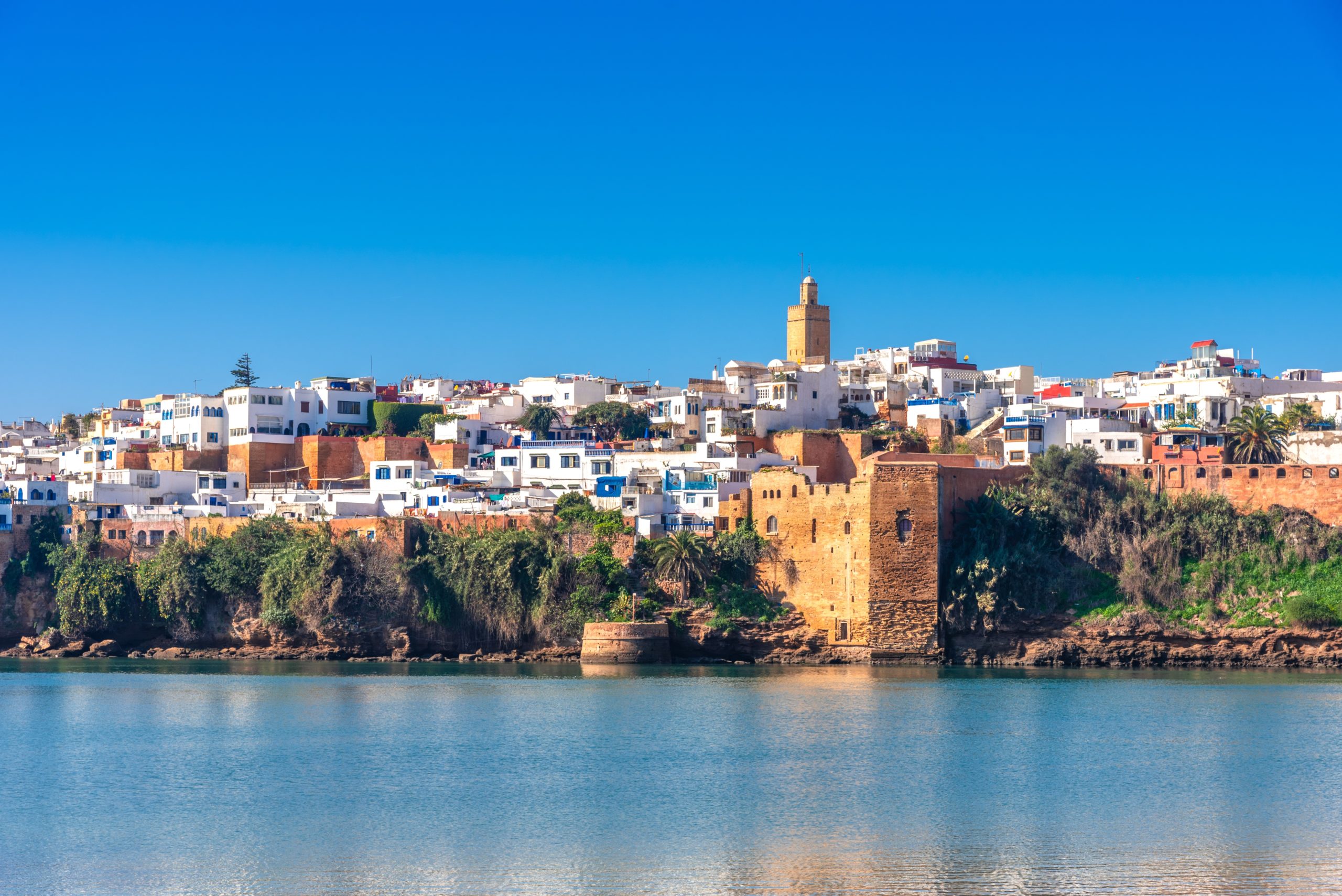
Morocco is known for the Sahara Desert and its camel treks, the Atlas Mountains, a 3,000 km Atlantic coast, the walled Medinas of Marrakech and Fes, the blue town of Chefchaouen, Tagine, Couscous and mint tea, riads and kasbahs, argan oil, Amazigh (Berber) culture, handmade crafts from zellige to rugs, hammams, Gnawa music, the film sets of Ouarzazate, its street cats, and a hospitality that is the first thing visitors mention when they get home. Since 2022 it is also known for football: the first African team in a World Cup semi-final and a co-host of the 2030 tournament. The two imperial cities and the desert between them fit into one trip: the Private Fes to Marrakech Desert Tour – 3 Days crosses from one to the other through the cedar forests, the dunes of Erg Chebbi and Aït Ben Haddou.
The Landscapes
1. The Sahara Desert
The image everyone carries: a line of camels on an orange dune. It is real, and it is a small corner of the picture. Morocco holds only the north-western edge of the Sahara, and most of that edge is hamada, flat black stone. The great dunes are two islands of sand: Erg Chebbi near Merzouga, 28 km long with crests around 150 metres, and Erg Chigaga beyond M’Hamid, wilder and sixty kilometres from the nearest tarmac. Neither is a day trip from Marrakech. Merzouga is 560 km away over the High Atlas, which is why the honest minimum is three days, and why the drive there turns out to be half of what people remember.
Where to see it: Erg Chebbi on any 3-day tour; our guide on how to plan a Sahara desert tour in Morocco has routes, prices and camps.
2. The Atlas Mountains
The wall between the Mediterranean world and the desert, 2,500 km long across three countries, and highest in Morocco: Jebel Toubkal, 4,167 m, is the roof of North Africa and you can see its snow from the rooftops of Marrakech from November to April. What the Atlas is really known for, among the people who have walked it, is the villages. Amazigh families farm terraces of walnut and barley at 2,000 metres, a mule is still the delivery van, and a stranger is still given tea. The epicentre of the September 2023 earthquake was in these mountains; the valleys have rebuilt and want visitors back.
Where to see it: Imlil, 90 minutes from Marrakech; the whole range is in our Atlas Mountains guide.
3. The Atlantic coast
Morocco has about 3,500 km of coastline on two seas, and the Atlantic side is the one the world knows. Taghazout, north of Agadir, has been a surf town since the 1960s and Anchor Point is one of the best right-hand breaks in Africa. Dakhla, far down in the south, is a 40-km lagoon where the kitesurfing world spends its winters. Between them lie fishing ports, argan hills that run down to the sea, and beaches with nobody on them. The honest note: the Atlantic here is cold and the currents are strong. People come to ride the water or eat from it more than to swim in it.
Where to see it: Essaouira is the nearest coast to Marrakech, under three hours; Agadir and Taghazout are three hours by motorway.
4. Skiing in Africa
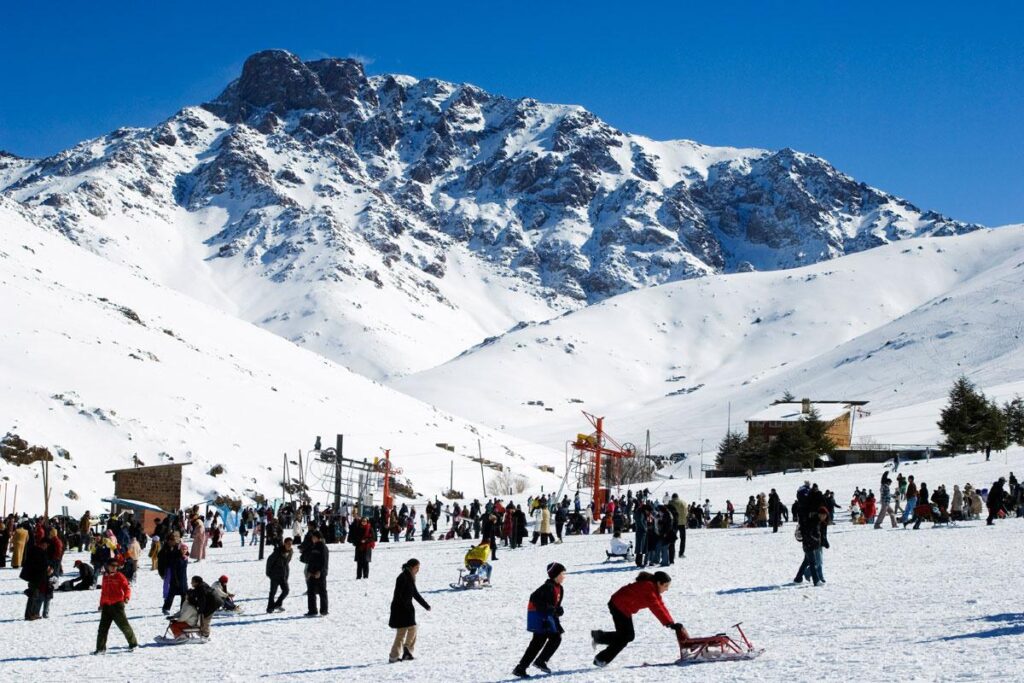
Yes, really. Oukaïmeden, 75 km from Marrakech, is a ski station at about 2,600 metres with lifts that reach roughly 3,200, which makes it the highest ski area in Africa. The season is short and depends on the year: January to March in a good winter, a few weekends in a poor one. Nobody should fly to Morocco to ski. But you can stand in snow in the morning and eat dinner on a warm Marrakech rooftop the same evening, and on a clear winter day that is one of the stranger pleasures the country offers. Ifrane, in the Middle Atlas, has a second small station at Michlifen.
Where to see it: a day out from Marrakech in winter; ask us to add it to an Ourika Valley day.
5. Argan country
The argan tree grows wild in one place on earth: the dry hills of south-west Morocco between Essaouira, Agadir and the Anti-Atlas, with a few across the border in Algeria. UNESCO made the forest a biosphere reserve in 1998. The oil comes in two kinds. Kernels roasted before pressing make the nutty culinary oil Moroccans eat with bread and honey; unroasted kernels make the cosmetic oil the world buys. It takes about 30 kg of fruit and many hours of cracking by hand to make one litre, which is why real argan oil is never cheap, and the work belongs to women’s cooperatives. As for the famous goats in the trees: goats do climb argan for the fruit, but the ones posed beside the Essaouira road are placed there for tips. Photograph them if you like; just know what you’re looking at.
Where to see it: the Marrakech–Essaouira road crosses the forest, and our Private Essaouira Day Trip from Marrakech stops at a cooperative where you can watch the cracking.
The Cities
6. Marrakech, the Red City
The city that gave the country its name: “Morocco” comes from “Marrakech” by way of the Spanish and the Portuguese. It was founded around 1070 by the Almoravids, and its nineteen kilometres of rammed-earth walls are the red that the nickname means. What it is famous for is one square. Jemaa el-Fna fills every evening with storytellers, musicians, snake charmers and a hundred food stalls under their own smoke, and UNESCO created its whole category of “intangible heritage” with this square in mind. Behind it lie the souks, the palaces and the 77-metre Koutoubia minaret that nothing in the Medina is allowed to overtop. The honest note: Marrakech is also the most tourist-worn city in the country, and the square has touts to match. Go at dusk, eat at the stalls where Moroccans are eating, and you’ll see why it earned the fame.
Where to see it: start with our guide to the 20 best things to do in Marrakech, or let a local show you the lanes on the Guided Marrakech Walking Tour.
7. Fes, and the oldest university in the world
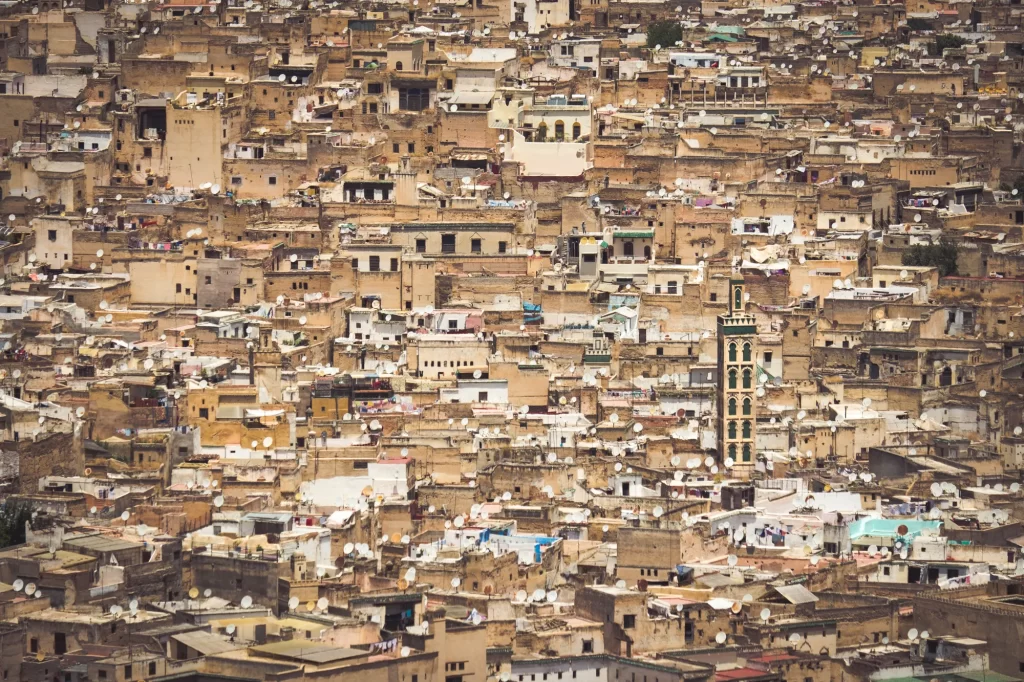
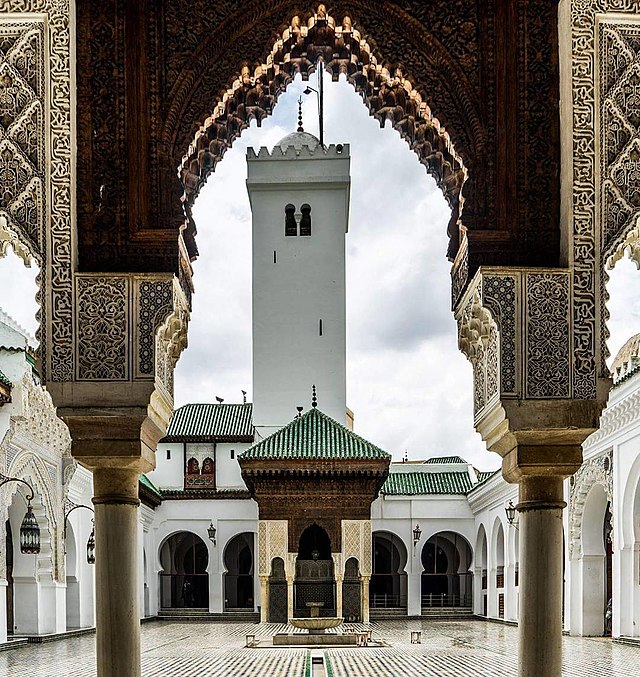
Fes el-Bali is the largest car-free urban area on earth: more than 9,000 alleys, founded in 789, where goods still move by donkey and handcart because nothing else fits. Inside it is the Chouara tannery, where hides are cured and dyed in stone vats much as they were in the Middle Ages, and Al-Qarawiyyin, founded in 859 by a woman, Fatima al-Fihri, with her inheritance. Guinness and UNESCO both call it the oldest continuously operating university in the world. Non-Muslims can’t enter the prayer hall, but the doors stand open and the courtyard is visible from the lane. Where Marrakech performs, Fes simply carries on with its work, and that is why many travellers end up preferring it.
Where to see it: our guide to the 10 best things to do in Fes.
8. Chefchaouen, the Blue City
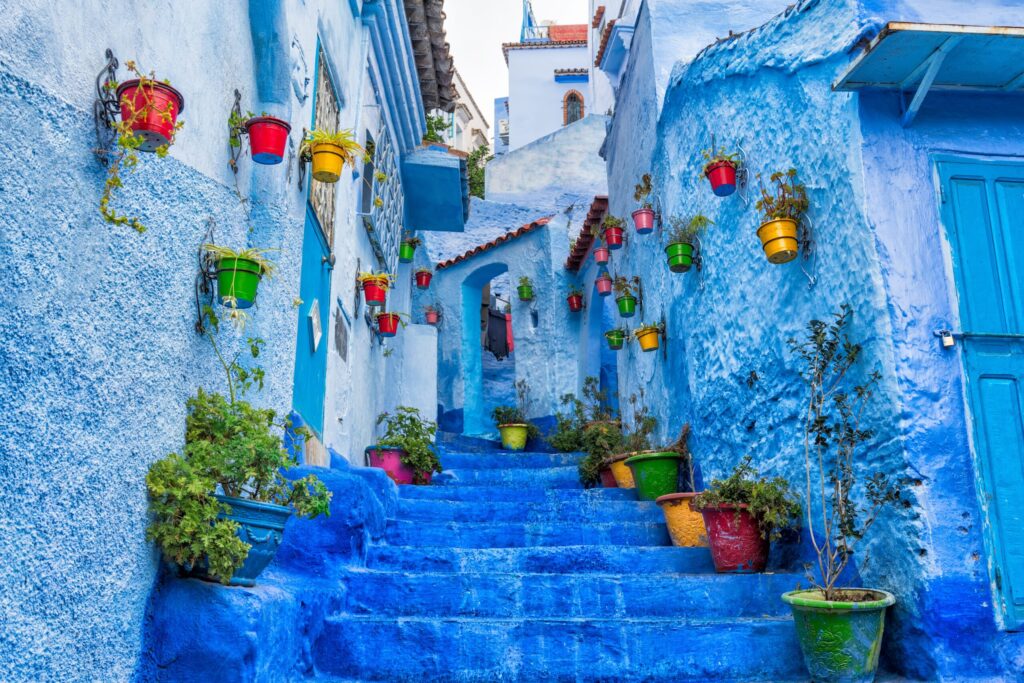
A small town in the Rif mountains where the walls, steps and doorways of the old quarter are washed in every shade of blue. The town dates from 1471 and took in Jewish and Muslim refugees from Spain after 1492. The blue is much younger than the legend says: the whole-town colour took hold in the 1930s, and why is still argued over. Some credit the Jewish community’s tradition of blue for heaven, some say it keeps mosquitoes away, some say it keeps houses cool. What isn’t argued over is that the town repaints every spring, and that the photograph is real. It is four hours from Fes and a long way from Marrakech, which is why it belongs on a longer route.
Where to see it: the Chefchaouen travel guide has the detail; the 6-Day Marrakech to Chefchaouen Desert Tour links it to the Sahara and Fes.
9. Casablanca, and the mosque on the ocean
The world knows Casablanca for a film that was shot entirely on a studio lot in California in 1942; no one in the cast set foot in Morocco. Rick’s Café exists today because an American diplomat built it in 2004 as a tribute. What the city is rightly known for is the Hassan II Mosque, finished in 1993 on a platform over the Atlantic, with room for 25,000 worshippers inside and a 210-metre minaret that was the tallest in the world until Algiers passed it. It is the one working mosque in Morocco that non-Muslims can tour inside, on guided visits outside prayer times. The rest of Casablanca is the country’s business capital and its largest city, with one of the best collections of Art Deco streets anywhere.
Where to see it: our guide to things to do in Casablanca.
10. Essaouira, the Wind City
A white-and-blue port laid out in 1764 by a French engineer for a sultan who wanted a harbour open to the world. The wind that named it blows off the Atlantic most afternoons from April to September, which is why it’s a kitesurfing town and why its beach is for walking, not sunbathing. It is known for the blue fishing boats and the grilled sardines at the port, for the ramparts that played Astapor in Game of Thrones, and for the Gnaoua festival each June. The legend that Jimi Hendrix wrote “Castles Made of Sand” here is false: he visited for a few days in 1969, two years after the song came out. The town doesn’t need the story.
Where to see it: our Essaouira travel guide.
The Table
11. Tagine and Couscous
The Tagine is named after its pot: a shallow clay dish with a conical lid that sends the steam back down, so meat cooks slowly in very little water. That suits a dry country, and it is why a Tagine tastes of the thing in it. Couscous is the other half of the national table and it belongs to a day. On Friday, after the midday prayer, families across the country sit down to one shared dish of it, and many restaurants serve it on Fridays only. UNESCO put Couscous on its heritage list in 2020, jointly for Morocco, Algeria, Tunisia and Mauritania. If a menu offers Couscous every day at every hour, it was not steamed three times that morning.
Where to taste it: our Moroccan food guide has the 20 dishes and where to eat them.
12. Mint tea
The national drink is younger than it looks. Green tea reached Morocco in quantity only in the mid-nineteenth century, when British merchants shut out of their usual markets sold their cargoes at Tangier and Essaouira. Moroccans added fresh mint and a great deal of sugar and made it their own, and the country is now among the world’s biggest buyers of Chinese green tea. It is poured from a height to raise a foam, served in small glasses, and offered everywhere: in a shop before the bargaining, in a home before anything else. Accepting a glass is the polite thing; you can always ask for it with less sugar.
Where to taste it: anywhere, within ten minutes of arriving.
13. Spices and Ras el Hanout
The pyramids of colour in the souks are partly for the camera, but the trade is old and real. Ras el Hanout means “head of the shop”: each spice seller’s own blend of his best, twenty to forty ingredients, no two alike. Cumin sits on the table beside the salt. Saffron comes from Taliouine in the Anti-Atlas, picked by hand in November, and it is the one to buy with care: real threads are dark red with a pale tip and colour water slowly. A bright bag at a bargain price is safflower or dyed corn silk.
Where to buy it: from a spice seller away from the main square, by weight.
The Culture
14. Amazigh (Berber) culture
The Amazigh are the indigenous people of North Africa, here for thousands of years before the Arabs arrived in the seventh century, and most Moroccans have Amazigh ancestry whatever language they speak at home. About a quarter of the country spoke an Amazigh language in the 2024 census. Tamazight has been an official language since 2011, its Tifinagh letters are on every public building, and the Amazigh new year, Yennayer, became a national holiday in 2024. “Berber” is the name outsiders gave; “Amazigh”, often translated as “free people”, is their own. What visitors meet of it is the rugs, the silver, the mountain villages and the music by the fire at a desert camp.
Where to meet it: our guide, Who Are the Berbers?
15. Hospitality
It is the thing visitors talk about most when they get home, and it isn’t a slogan. A guest in Morocco is fed first and asked questions afterwards. A driver will share his lunch, a family in the Atlas will bring out tea and bread for strangers on the path, and refusing outright is the only real rudeness. The honest note: in the tourist lanes of Marrakech and Fes, friendliness is sometimes a sales opening, and visitors learn to tell the two apart within a day. Outside those few streets the welcome is the real thing.
Where to meet it: our Morocco culture and etiquette guide explains how to accept and how to decline.
16. Riads and kasbahs
Two buildings the world borrowed the words for. A riad is a town house turned inward: blank walls on the lane, and inside a courtyard with a fountain or a garden, with every room opening onto it. Hundreds in Marrakech and Fes are now guesthouses, and staying in one is half the reason people come. A kasbah is the opposite idea, a fortified house of rammed earth built to be seen from far away, with towers at the corners. The south is lined with them, and the most famous, the fortified village of Aït Ben Haddou, has been UNESCO-listed since 1987.
Where to see them: read What Is a Riad? and What Is a Kasbah?; Aït Ben Haddou is Day 1 of every desert tour from Marrakech.
17. Crafts made by hand
Morocco is one of the few countries where the things in the market are still made in the next street. Zellige, the geometric tilework, is chipped by hand in Fes from glazed squares, piece by piece. Leather comes from the tanneries. Rugs come from the Middle and High Atlas, each region with its own style, from the cream and black of the Beni Ourain to the rag rugs called boucherouite. Brass lanterns are punched in the Marrakech souks, thuya wood is inlaid in Essaouira, and the green pottery of Tamegroute is fired on the edge of the desert. The craft is the reason the souks exist; the bargaining comes second.
Where to see it: our Marrakech souks guide maps which craft is made where.
18. Hammams
The public steam bath is a weekly habit for most Moroccans, and for many it’s as much about meeting people as about washing. The order doesn’t change: heat, then black olive soap, then a hard scrub with a rough glove that takes off more skin than you thought you had, then ghassoul clay, then rest. A neighbourhood hammam costs about 20 MAD with separate hours or rooms for men and women, and it’s the real one. A hotel or spa hammam costs 300 MAD and up and is gentler and private. Either way you come out cleaner than you have ever been.
Where to try it: ask your riad for the neighbourhood hammam, or book a spa one for the day you return from the desert.
19. Gnawa music, and the film sets
Two things the world has seen or heard without knowing they were Moroccan. Gnawa is the trance music of the descendants of people brought across the Sahara in slavery: a three-stringed bass lute, iron castanets, and songs that run all night. UNESCO listed it in 2019, and Essaouira’s festival each June draws musicians from across the world to play with its masters. The film sets are at Ouarzazate, where studios opened in 1983 to give directors a desert within reach of Europe. Lawrence of Arabia, Gladiator, The Mummy and Game of Thrones all filmed in this corner of the south, and Aït Ben Haddou has played half the cities of the ancient world.
Where to find them: Gnawa at Khamlia near Merzouga and in Essaouira; the studios on the road to the desert.
The Surprise
20. The street cats
Nobody puts them in the brochure and everybody comes home with photographs of them. Cats are everywhere in Morocco: asleep on carpet stacks in the souks, waiting under the fish grills at Essaouira’s port, posed on blue steps in Chefchaouen as if hired. They belong to no one and to the whole street. Shopkeepers put out water and scraps, butchers save trimmings, and the reason usually given is religious: Islamic tradition holds that the Prophet loved cats, and kindness to them is counted as a good deed. Dogs get no such welcome, which is why you’ll see few. The honest note: these are street animals and Morocco is not rabies-free. Photograph them, feed them if you like, and think twice before picking one up; a bite or a scratch means a clinic the same day.
Where to see them: the fish port at Essaouira at lunchtime, and any quiet lane in a Medina.
What Morocco Should Be Famous For
One thing Moroccans would put at the top of this page, and four that hardly anyone outside the country knows.
Football
In December 2022 the national team beat Belgium, Spain and Portugal and became the first African and the first Arab side to reach a World Cup semi-final. The country stopped; visitors who were here remember the streets. Morocco hosted the Africa Cup of Nations at the end of 2025 and will co-host the 2030 World Cup with Spain and Portugal, which is why new stadiums, railways and roads are going up in every city you’ll visit. Ask your driver about the Atlas Lions and allow twenty minutes.
The four
- The oldest known humans. Fossils of Homo sapiens found at Jebel Irhoud, about 100 km west of Marrakech, were dated in 2017 to roughly 300,000 years. That is about 100,000 years older than anything found before, and it moved the story of our species.
- America’s oldest friend. In 1777 the Sultan of Morocco became the first head of state to recognise the United States. The friendship treaty that followed in 1786 is the longest unbroken one in American history, and the old American Legation in Tangier was the first property the US owned abroad.
- The world’s phosphate. About 70% of the planet’s known phosphate reserves lie under Morocco. Phosphate makes fertiliser, so a large share of the world’s food depends on it.
- The sun at Ouarzazate. The Noor complex outside Ouarzazate is one of the largest concentrated solar plants in the world. Its tower stands near the road every desert tour takes, and most people drive past without knowing what it is.
See It for Yourself
| You came for | The tour | From |
|---|---|---|
| The Sahara, kasbahs and the gorges | 4 Days Marrakech to Merzouga Desert Tour | €275 |
| Marrakech, the desert and Fes in one trip | Private Marrakech to Fes Desert Tour – 3 Days | €225 |
| The Sahara, Mountains and Casablanca | 4-Day Desert Tour from Marrakech to Casablanca | €315 |
| The Medinas, souks and Jemaa el-Fna | 6-Day Morocco Desert Tour from Casablanca | €495 |
| The Atlas and Amazigh villages | Atlas Mountains Day Trip from Marrakech | €50 |
| The coast, argan country and the cats | Shared Essaouira Day Trip from Marrakech | €19 |
Morocco is known for the Sahara, the Atlas, its Atlantic coast, the Medinas of Marrakech and Fes, Chefchaouen, Tagine, Couscous and mint tea, riads, kasbahs, crafts, hammams, Gnawa music and its hospitality.
Much of the postcard has a truer story: Chefchaouen’s blue dates from the 1930s, the film Casablanca was shot in California, mint tea arrived in the 1850s, and the roadside goats in the argan trees are staged.
The records that hold up: Toubkal at 4,167 m is North Africa’s highest peak, Fes el-Bali is the world’s largest car-free urban area, and Al-Qarawiyyin (859) is the oldest continuously operating university.
The Hassan II Mosque in Casablanca is the one working mosque in Morocco that non-Muslims can tour inside.
Moroccans would add football: a World Cup semi-final in 2022 and co-hosting in 2030.
Four things deserve more fame: the 300,000-year-old human fossils of Jebel Irhoud, the 1777 recognition of the United States, 70% of the world’s phosphate, and the Noor solar plant.
The Sahara needs three days from Marrakech; the Atlas, Essaouira and the Medina each fit in one.