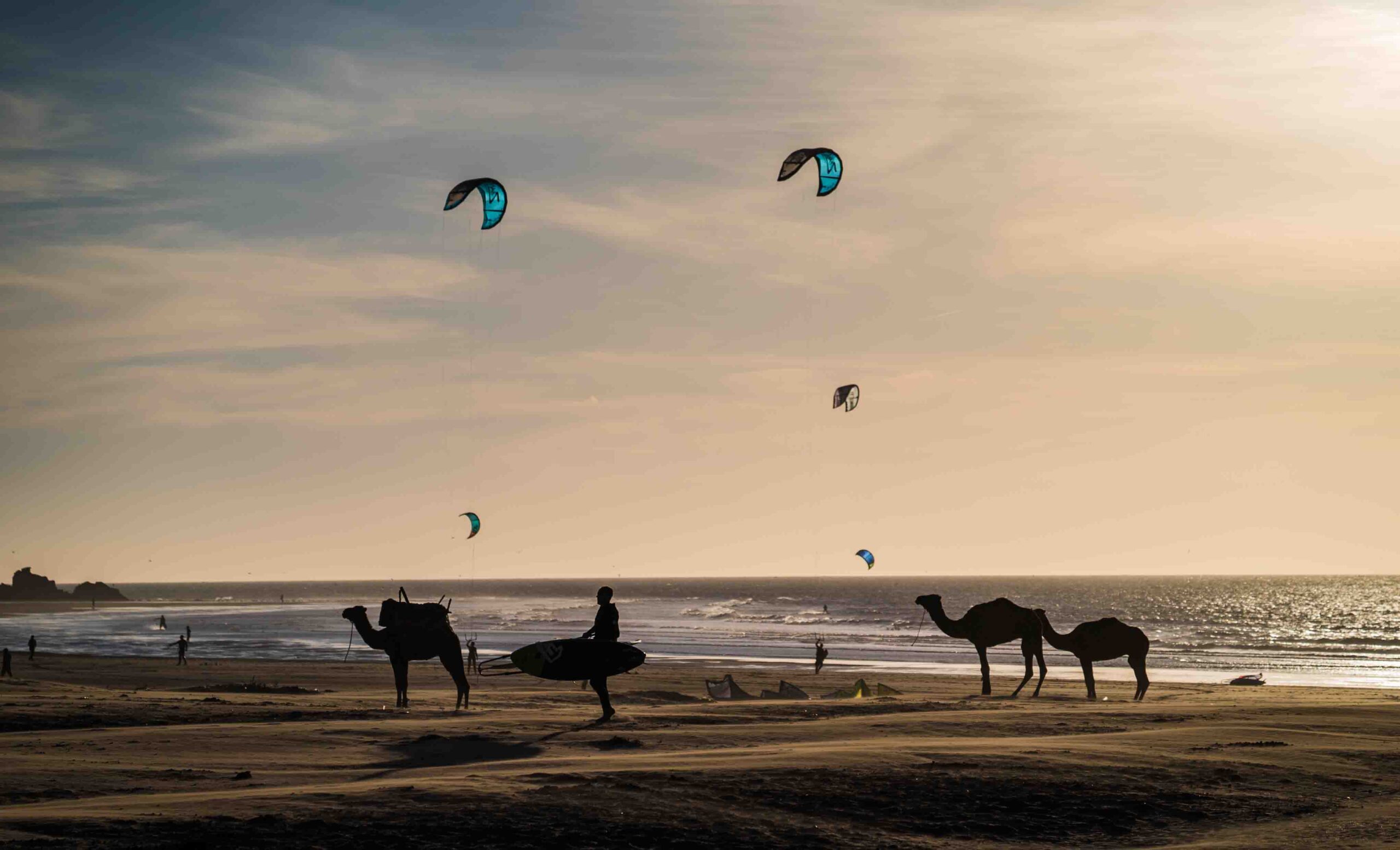
Essaouira is an Atlantic port 190 km (about 2.5 hours) west of Marrakech, with a UNESCO World Heritage medina of whitewashed houses and blue shutters inside the ramparts Sultan Mohammed III built in the 1760s. Known as the Wind City of Africa — the trade wind blows hardest April to August — it’s Morocco’s kitesurfing capital and a town for walking, not sunbathing. The must-dos: the Skala ramparts, the fishing port and the fish grills (60–150 MAD a plate), the medina’s thuya-wood workshops, the beach walk to Diabat, and the Gnawa and World Music Festival in June. Best in spring and autumn; one full day covers it, a night is better. Our day trip from Marrakech, shared from €19 or private from €27, includes the argan-cooperative stop — both are in the table below.
Key Facts
| Fact | Detail |
|---|---|
| Location | Atlantic coast, 190 km west of Marrakech |
| Distance from Marrakech | ~2.5 hours by road; ~3 hours by bus |
| Nickname | The Wind City of Africa |
| UNESCO | The medina — World Heritage Site since 2001 |
| Founded | 1764 by Sultan Mohammed III, as the port for the Sahara trade; formerly Mogador |
| Population | ~80,000 |
| The wind | The alizé trade wind, strongest April–August; calmest October–February |
| Best season | Spring (March–May) and autumn (September–November) |
| Gnawa Festival | Late June, since 1998 — free concerts across the medina and the beach |
| Signature craft | Thuya wood — the burl of a tree that grows only here and in the Atlas |
| Beach | 3 km of sand south to Diabat; walking, camels, kites — not swimming |
| MDT day trip | Shared from €19 · Private from €27, both with the argan stop |
Things to Do
| Activity | Time | Notes |
|---|---|---|
| Wander the medina | 1–2 hrs | White walls, blue shutters, thuya and silver workshops, the calmest souks in Morocco |
| The Skala de la Ville | 30 min | The 1760s sea rampart: bronze cannon, the Atlantic below, the best sunset in town. Free |
| The Skala du Port | 20 min | The harbour bastion; climb for the view of boats, medina, and the Purple Islands. ~60 MAD |
| Place Moulay Hassan | 30–60 min | The main square between the medina and the port: cafés, musicians, the town’s living room |
| The fishing port | 30 min | Blue boats, the morning catch, gulls — go before ten |
| A fish-grill lunch | 45 min | Pick it from the ice, they grill it: 60–150 MAD a plate by the fish; sardines cheapest |
| The beach walk to Diabat | 1.5–2 hrs | South along the sand to the Bordj El Berod ruin and the village; camels on the way, ~150 MAD an hour |
| Kitesurf or windsurf | 2–3 hrs | Schools on the beach; a two-hour lesson 500–700 MAD; April–November |
| Thuya wood workshops | 30 min | Boxes, trays, chessboards from the burl; under the Skala and in the medina |
| The mellah and the synagogues | 30 min | The old Jewish quarter — Slat Lkahal and Simon Attias synagogues restored; see the history below |
| An argan cooperative on the road | 30 min | Included on our day trips: the oil pressed by hand, the test, the fair price |
The Medina & Landmarks
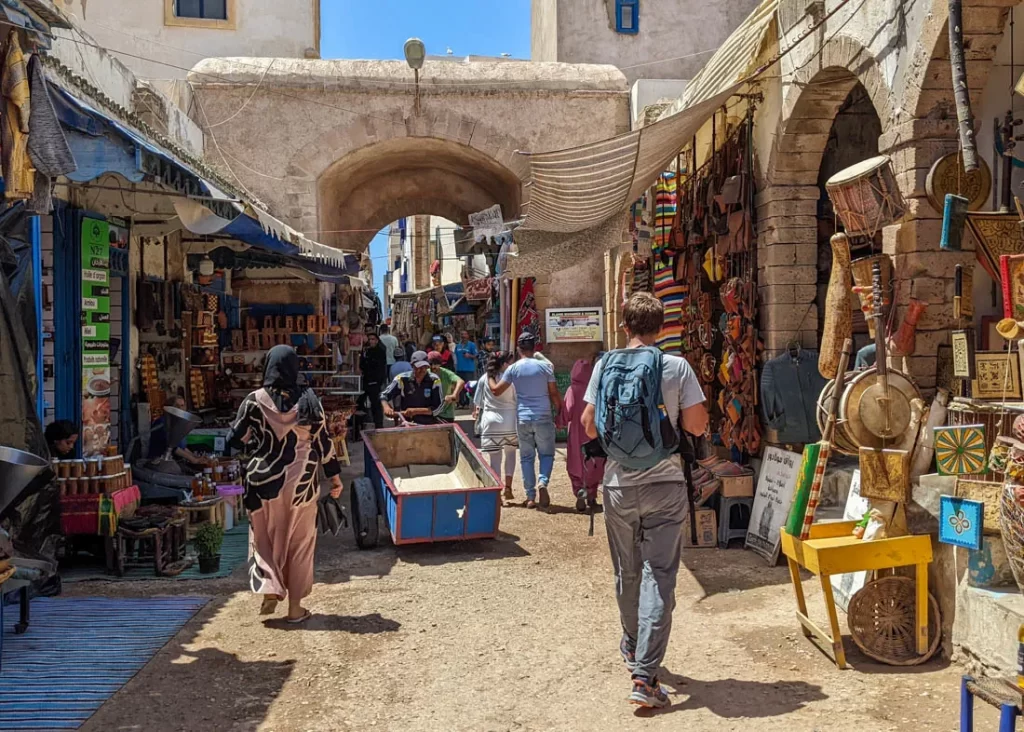
The Medina is compact, almost a grid, and walkable in an hour — Sultan Mohammed III had it laid out in the 1760s by a French engineer, Théodore Cornut, on European lines, which is why its streets run straight where Marrakech’s twist. White walls, blue doors and shutters, workshops under the arcades, and an unhurried pace: the selling here is soft, and nobody follows you.
The Skala de la Ville: the long sea rampart on the Medina’s western edge, built in the 1760s with bronze cannon pointing at an Atlantic nobody attacked from. The Portuguese had a fort here in 1506, Castelo Real, and left within a decade; the walls you walk were the sultan’s, designed to look Portuguese. Free; go at the end of the day for the sunset and the spray.
The Skala du Port: the bastion at the harbour mouth, with the town’s best view — the boats below, the Medina behind, the islands offshore. About 60 MAD; Orson Welles filmed the opening of Othello here in 1949, and the square at the harbour gate carries his name.
Place Moulay Hassan: the broad square between the Medina gate and the port — cafés on three sides, musicians, juice carts, the terrace of Taros above — where the town meets. From here the port is two minutes, the beach five.
The port: Morocco’s third fishing harbour, and the one that looks the part — blue wooden boats, nets, the morning’s catch on the quay, the gulls. Come before ten to see it working; come at noon for the grill stalls.
Portuguese, French, Jewish, Berber, and Arab influences are all visible in the buildings and layout.
Seafood & Food
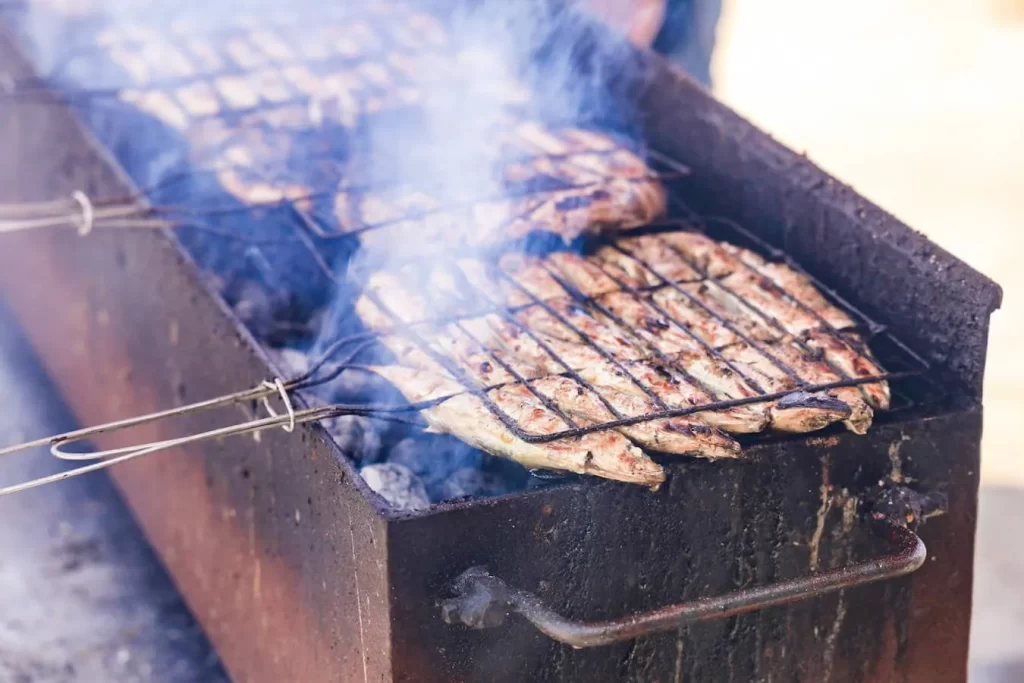
The fish grills by the port are the meal Essaouira is known for, and they work like this: a row of stalls between the harbour gate and Place Moulay Hassan, the catch on ice in front of each — sardines, sea bream, sole, calamari, prawns, the occasional lobster — you choose, they weigh, and ten minutes later it arrives grilled over charcoal with salt, cumin, lemon, a tomato salad, and bread. Prices are by the fish and the weight: sardines 30–40 MAD a plate, bream or sole 80–120, a full mixed platter for two 200–300, a lobster whatever they can get. Agree the price when they weigh it — the one point of friction — and skip the stalls that drag you in; the busy ones with Moroccan families are the ones.
Beyond the port: sardines stuffed with chermoula — the coriander, garlic, cumin, and lemon marinade that is the coast’s flavour — fish tagine with preserved lemon, seafood pastilla, and the goat cheese from the Berber villages behind the town. Taros on the square for a sunset drink, Chez Sam at the end of the harbour for the old-school seafood, and the small places inside the Medina at 60–100 MAD a plate. For the rest of the Moroccan table, see our Moroccan cuisine guide.
The Wind — Told Honestly
Essaouira is the Wind City because of the alizé, the north-east trade wind that funnels down the coast and blows hardest from April to August — exactly the months most visitors come. It makes the town five to ten degrees cooler than Marrakech, which is the point of a summer day trip, and it makes it the kitesurfing and windsurfing capital of Morocco, with a dozen schools on the beach and world-class riders from May on. What it doesn’t make it is a sunbathing beach: on a windy afternoon the sand blows, the sea is cold (18–20°C) with an undertow, and the beach is for walking, riding, and watching the kites. The calm months are October to February — the locals’ beach season, and the time for a swim. Pack a windproof layer in every month, and a scarf.
History & Culture
The port of Timbuktu: Essaouira exists because of the Sahara. In 1764 Sultan Mohammed III chose this bay as the single port through which the caravan trade — gold, ivory, ostrich feathers, gum arabic from Timbuktu and the Sudan — would reach Europe, and had Théodore Cornut, a French engineer, design a fortified city for it. He staffed it with the tujjar al-sultan, “the sultan’s merchants” — Jewish trading families from Agadir, Fes, and Tetouan who ran the trade with London, Marseille, and Amsterdam — and within twenty years Mogador, as Europe called it, handled nearly half of Morocco’s foreign trade. By 1900 it was the only city in Morocco with a Jewish majority; the mellah, the restored Slat Lkahal synagogue, and the Simon Attias synagogue with its small museum are what remains of that town, and Bayt Dakira, the “House of Memory,” tells its story.
The Portuguese, the name, and the films: the Portuguese held a fort here from 1506 to 1510 and left the name — Mogador, from a corruption of Sidi Mogdoul, the saint whose tomb overlooks the beach; the Arabic Essaouira, “the little picture,” came with the sultan’s walls. Orson Welles made the town his Cyprus for Othello in 1949, filming the opening on the ramparts; the square by the harbour gate is his. Jimi Hendrix spent a few days here in July 1969 — the village of Diabat and its beach ruin claim him — but “Castles Made of Sand” was recorded in 1967, two years before he came; the song didn’t start here, whatever the café says.
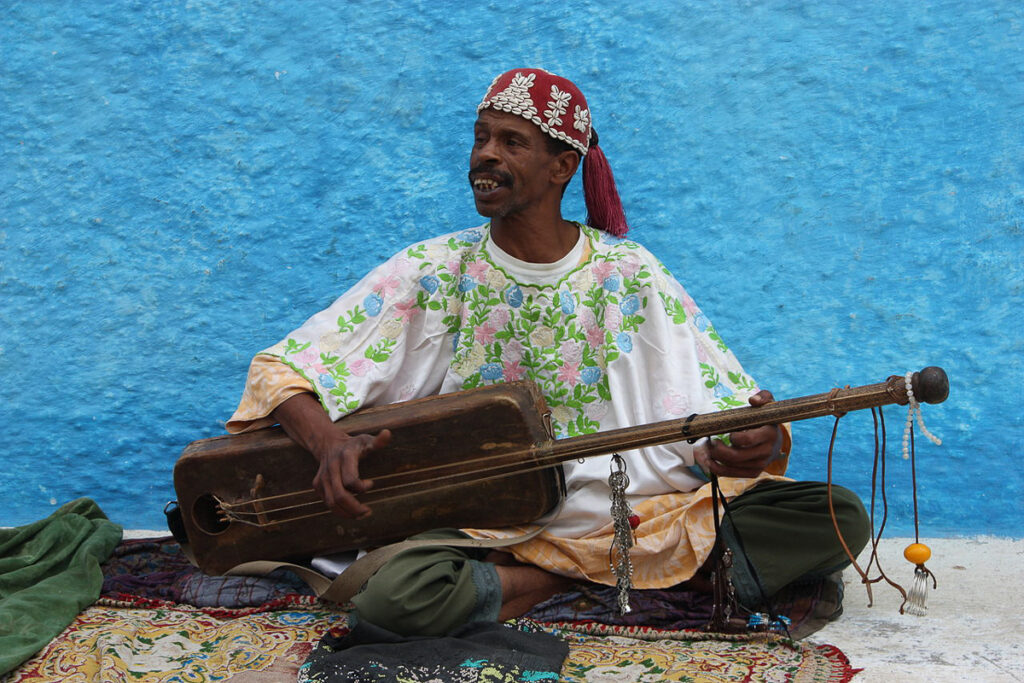
The Gnawa: Essaouira’s music is the sound of the trade’s other cargo. The Gnawa are the descendants of enslaved West Africans brought up the caravan routes, and their music — the three-stringed guembri, the iron castanets, the call-and-response chants of the night-long lila ceremony — is a healing tradition that Essaouira kept alive when the rest of the country let it fade. The Gnawa and World Music Festival, every June since 1998, puts the maalems, the Gnawa masters, on stage with jazz and world musicians from everywhere, free, across the Medina and the beach, for four days and some 300,000 people. Book a room months ahead; the rest of the year, the Gnawa play in the Medina’s small venues most nights.
The Argan Road — Cooperatives and the Goats
The road from Marrakech crosses the only place on earth argan trees grow wild — the thorny, gnarled forest between Chichaoua and the coast that UNESCO lists as a biosphere reserve. Two things happen on it.
The women’s cooperatives, where the fruit is dried, the nuts cracked between two stones, and the kernels ground into oil the way it’s been done for centuries — our day trips stop at one: genuine oil at 150–250 MAD per 100 ml (cosmetic pale and odourless, culinary dark and nutty), amlou — argan, almond, and honey — for the bread, and the chance to see why the real thing costs what it does.
How to Get There — And the Day-Trip Clock
From Marrakech it’s 190 km and about 2.5 hours on a good road. Our day trip leaves Marrakech at about 8 AM, stops at the argan cooperative, and reaches the Medina gate by 11:30; the drive back leaves at about 5 PM. That’s five and a half hours in town — enough, in order: the port and the Skala du Port first while it’s working, the Medina and the thuya workshops, a fish-grill lunch at 1, the Skala de la Ville and the ramparts, then the beach walk or Place Moulay Hassan with a coffee until the van. The shared trip is in the table below; the Private Essaouira Day Trip from Marrakech, from €27, runs the same day at your own pace, with a later return for the sunset on the ramparts if you want it.
By bus: Supratours and CTM run several daily services from Marrakech, about three hours, around 80–100 MAD. Continuing down the coast: Essaouira to Agadir is 175 km and three hours, through Sidi Kaouki, Taghazout, and the real goat forests; from Marrakech, the Marrakech to Agadir Day Trip does the direct road.
Where to Stay
Inside the Medina, in a riad — €30–80 a night for a courtyard house with a rooftop over the ramparts and the sound of the gulls; what to expect is in our riad guide. Hostels from about €10 for the surf crowd; the seafront hotels along the beach for a pool and a car at the door; and Diabat, 3 km south, for the surf lodges and the quiet. Prices rise in the festival week in June and at New Year.
Best Time to Visit
Spring — March to May
18–25°C, the wind still moderate, the light clear, the argan in flower in March. The ideal months for the whole package.
Autumn — September to November
Warm, the wind dropping, the sea at its warmest, the kites still flying; October is the locals’ favourite.
Summer — June to August
22–26°C and cooler than Marrakech by ten degrees — the reason for the day trip — but the alizé at full strength: for kites, walks, and the festival in June, not for sunbathing.
Winter — December to February
12–18°C, the wind at its calmest, grey days possible, the town at its most local, and the only season for a swim.
MDT Essaouira Day Trips
| Tour | Type | Includes | From |
|---|---|---|---|
| Essaouira Day Trip from Marrakech | Shared | Hotel pickup, the argan stop, 5–6 hours free in Essaouira, return by evening | €19 |
| Private Essaouira Day Trip from Marrakech | Private | The same day with your own vehicle and driver, your pace, a later return on request | €27 |
The Essaouira day trip is our most-booked excursion from Marrakech: the coast, the Medina, and lunch from the boat in one day, and ten degrees cooler than the city in summer. Essaouira is the town that makes the top-ten lists of what Morocco is known for for its light and its music as much as its walls.
Where: The Atlantic coast, 190 km and 2.5 hours west of Marrakech; a UNESCO Medina inside 1760s ramparts.
Identity: The Wind City — the alizé strongest April–August; kites, walks, and watching, not sunbathing.
Must-do: The Skala at sunset, the port before ten, a fish-grill lunch (60–150 MAD), the Medina’s thuya workshops, the beach walk to Diabat.
Only here: The Purple Islands of Juba II, the port the Sahara trade built, the Gnawa and their June festival.
The road: An argan cooperative worth the stop; the roadside goats are staged.
Day trip: Shared from €19, private from €27, five and a half hours in town; a night is better.