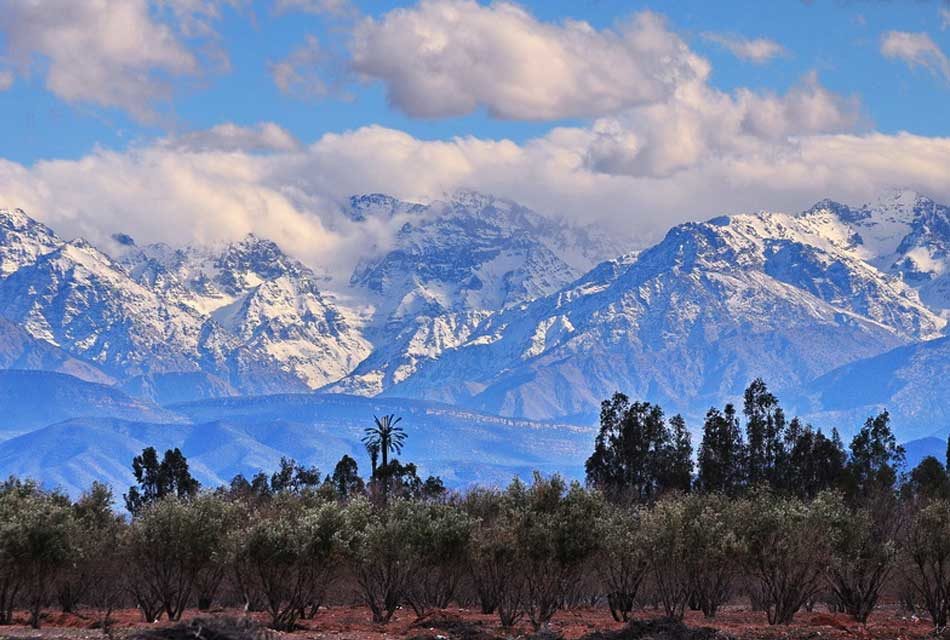
What: North Africa's highest mountain range; Mount Toubkal (4,167 m) is the summit. Where: 1.5 hours south of Marrakech; Imlil is the main trekking base. Do: Toubkal treks (2–5 days), valley hikes, Berber village stays, day trips, skiing (Nov–Apr). Five standout valleys: Ourika, Azzaden, Agoundis, Amizmiz, Lalla Takerkoust. Tours: a day trip from €50, multi-day treks from €195 — all in the table below. Best months: March–May and September–November.
Atlas Mountains Tours & Treks
| Tour / Trek | Duration | Difficulty | From |
|---|---|---|---|
| Atlas Mountains Day Trip | 1 day | Easy | €50 |
| Toubkal Ascent — 2 Days | 2 days | Challenging | €125 |
| Toubkal Ascent — 3 Days | 3 days | Moderate–Challenging | €195 |
| Atlas Valleys Trek — 3 Days | 3 days | Easy–Moderate | €195 |
| Imlil to Ourika — 3 Days | 3 days | Easy–Moderate | €195 |
| Toubkal Trek — 4 Days | 4 days | Moderate–Challenging | €250 |
| Toubkal + Berber Villages — 5 Days | 5 days | Moderate | €330 |
| Toubkal + Sahara — 5 Days | 5 days | Moderate–Challenging | €345 |
All treks include licensed mountain guides, mules for luggage, all meals, and refuge or guesthouse accommodation, and your guide checks your gear before you set off.
Which trek is right for you?
- Day trip — families, first-timers, and anyone with one free day.
- 2-day Toubkal — fit hikers who want the summit fast.
- 3-day Toubkal — the sweet spot for most: an acclimatisation day, then the summit.
- 4-day Toubkal — the winter format: three nights at the refuge and a spare summit day if the weather turns.
- 5-day Toubkal & Berber villages — village nights first, the summit last.
- Atlas Valleys or Imlil to Ourika (3 days) — the mountains without the summit, at a walker’s pace.
- Toubkal + Sahara (5 days) — the summit and the dunes in one week.
Mount Toubkal — The Highest Peak
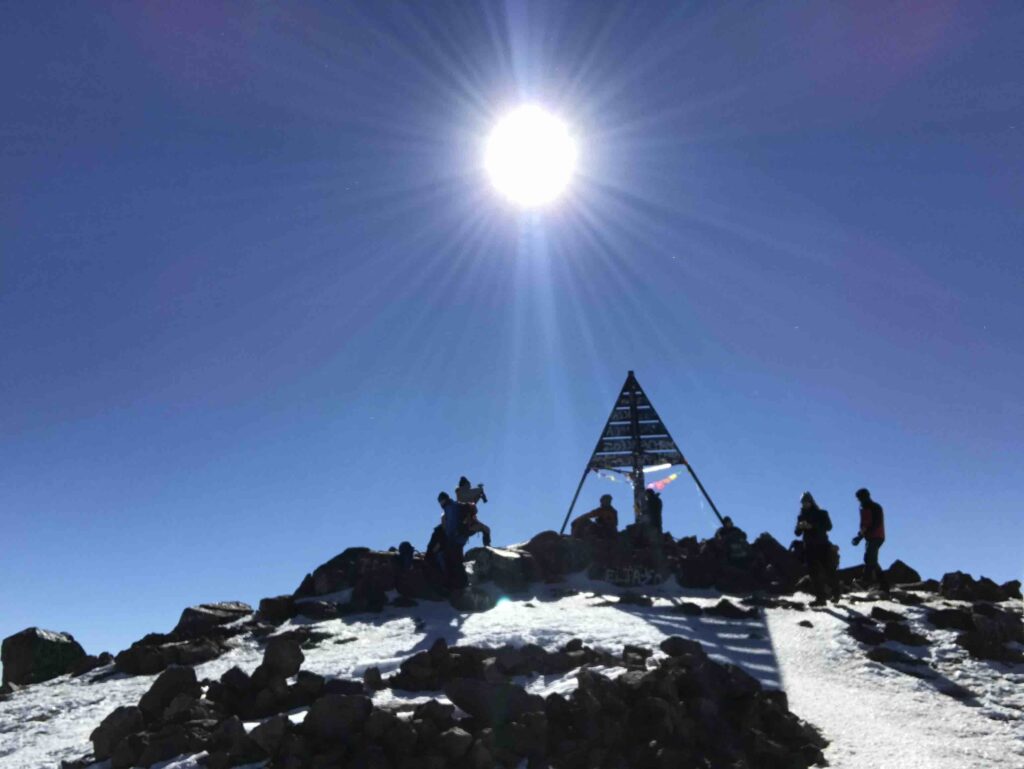
Jebel Toubkal (4,167 m) is the highest peak in North Africa and the centrepiece of the High Atlas. It’s a steep hike, not a technical climb — no ropes or climbing skills in summer; crampons and an ice axe from November to April. The summit rewards you with views across the entire range, the Sahara plains to the south, and on the clearest days the Atlantic haze to the west.
From Imlil to the summit: Day 1 climbs to the Toubkal Refuge (3,207 m, about 5 hours). Day 2 is summit day — 3–4 hours up, 2–3 down. The refuge has dormitory beds, meals, and (in summer) hot showers. A licensed mountain guide is required by law above the refuge, and every one of our treks includes one.
5 Hidden Valleys Worth Exploring
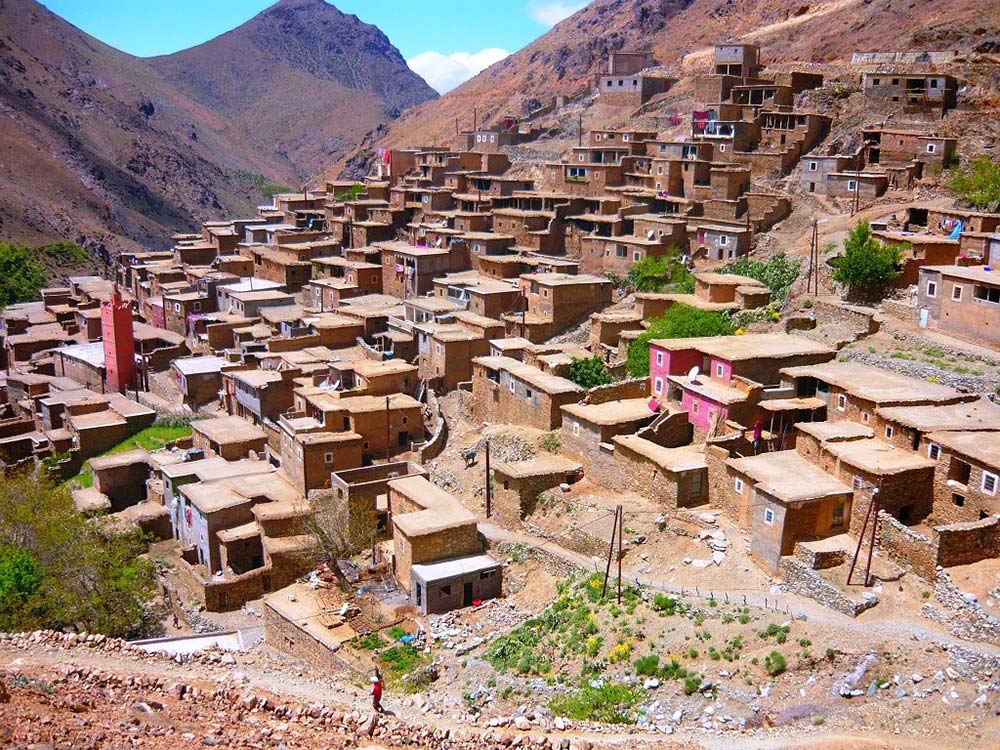
Most visitors see only Imlil and the Toubkal trail. The Atlas hides valleys that offer quieter, more authentic days — five our guides recommend:
| Valley | From Marrakech | Difficulty | Highlights |
|---|---|---|---|
| Ourika Valley | 60 km (~1 h) | Easy | Waterfalls, Berber villages, riverside lunches |
| Azzaden Valley | Via Imlil (5–6 h walk) | Moderate | Silence, juniper forest, the Ighouliden waterfalls |
| Agoundis Valley | Via Ijoukak (3–4 day trek) | Advanced | Remote, an alternative approach to Toubkal |
| Amizmiz | 55 km (~1 h) | Easy | Tuesday Berber market, foothill villages |
| Lalla Takerkoust | 40 km (~45 min) | Easy | Lake views, a quiet trekking base |
Ourika is the easiest: the shared Ourika Valley day trip (from €17) reaches Setti Fatma’s waterfalls, villages, and river cafés in an hour — perfect for families. Azzaden, south-west of Imlil, is our pick for solitude, and the valley both three-day treks sleep in. Agoundis is for serious trekkers only — a multi-day route to Toubkal via Ijoukak that few attempt. Amizmiz hosts a Tuesday market where villagers trade cattle, sheep, and cloth. Lalla Takerkoust is a reservoir framed by bare hills, 23 km from Amizmiz, with the Atlas behind it.
Berber Culture & Villages
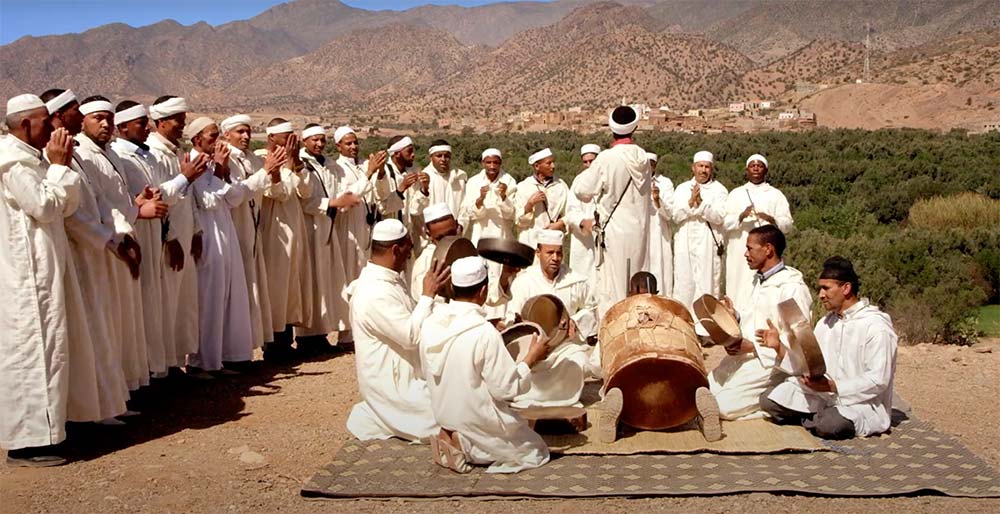
The Atlas has been home to Amazigh (Berber) communities for millennia. Their culture runs through everything on the mountain — the terraced farmhouses clinging to hillsides, the irrigation channels feeding walnut and almond orchards, the welcome of mint tea and fresh bread that greets every visitor.
The Ahouache is the traditional group dance, performed by men and women at weddings, harvests, and festivals. Village life keeps a working balance: women manage herding, milking, and weaving; men handle irrigation, craftwork, and trade. On multi-day treks you sleep in village guesthouses and share meals with families — the most authentic immersion Morocco offers, and a few words of local manners go a long way: see our Morocco culture and etiquette guide.
Wildlife — Macaques, Mouflon & Rare Species
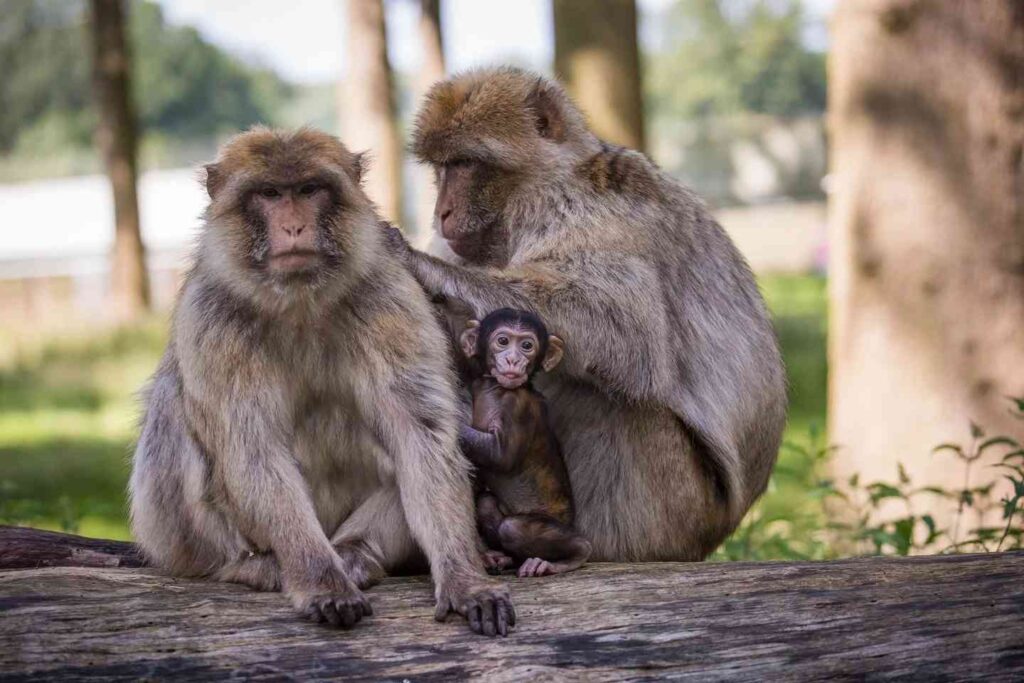
The Atlas Mountains harbour a surprising diversity of wildlife:
Barbary macaques are the headline species — the only wild primates in Africa north of the Sahara. Stocky, pink-faced, and nearly tailless, they live in troops in the cedar forests; the best sightings are near Azrou in the Middle Atlas and, more rarely, in Toubkal National Park.
Barbary sheep (aoudad) survive on the highest rocky slopes on grass and scrub, drawing water from their food; you may spot them on quiet treks. Cuvier’s gazelle, an endangered antelope with a few thousand animals left across Morocco, Algeria, and Tunisia, survives in the remotest parts of the range. The Barbary leopard once roamed these mountains; there has been no confirmed sighting in Morocco for decades, and it is almost certainly gone from the Atlas — a reminder of how wild this range was within living memory.
Flora: blue tussock grass, hedgehog broom, spring wildflowers from March to May, and the cedar forests that shelter the macaques.
Skiing at Oukaïmeden

Few visitors expect snow in Morocco — but from November to April the High Atlas above 2,000 m is white. Oukaïmeden (2,600 m) is North Africa’s highest ski resort, 1.5 hours from Marrakech: basic lifts, equipment rental, a handful of runs. Don’t expect Alpine standards; do expect the novelty of skiing with Atlas panoramas and nobody in the lift queue.
Winter treks to Toubkal need crampons, an ice axe, and winter-grade layers — your guide checks your kit in Imlil and arranges rental for anything missing. The snow-covered range is spectacular and far quieter than summer.
Geology — 200 Million Years of History

The Atlas formed around 200 million years ago, in the same tectonic era as the European Alps. The High Atlas shows sedimentary layers, fossil beds — marine fossils at high altitude, proof this was once sea floor — limestone caves, and dramatic folds. Trilobites turn up in the markets near Erfoud on the Sahara side of the range.
The Tizi n’Tichka pass (2,260 m), which every Marrakech desert tour crosses, cuts through some of the most striking layers of all — watch the colours change in the rock faces as the road climbs.
Stargazing & Sahara Gateway
The High Atlas offers exceptional stargazing — thin air, no light pollution, and clear skies combine for Milky Way views that rival the Sahara’s. The best spots are above 2,500 m around the Toubkal Refuge and in remote valley guesthouses.
The southern side of the range is the gateway to the Sahara. The Tichka road connects Marrakech to the desert, and a 3-day Merzouga Desert Tour crosses the Atlas on its first morning — sweeping mountain views before the descent to the kasbahs and dunes.
Planning & Getting There
From Marrakech: the foothills start about 45 minutes south. Imlil, the main trekking base, is 1.5 hours by road; Ourika one hour; Oukaïmeden 1.5 hours.
Guides: licensed mountain guides cost roughly 300–600 MAD per day depending on the trek, are required above the Toubkal Refuge, and are worth having everywhere for navigation, safety, and context. Every MDT trek includes one.
Packing: sturdy hiking boots, layers (the temperature drops fast with altitude), sun protection, water, and a warm jacket for nights above 2,000 m. Full list: what to pack for a Morocco trip.
Connectivity: signal fades above Imlil. Download offline maps and read our Morocco SIM card guide before you go.
Best Time to Visit
Spring — Mar to May
15–25°C in the valleys. Wildflowers, flowing streams, snow melting on the peaks. Ideal trekking. Almond blossom in March.
Autumn — Sep to Nov
15–25°C. Clear skies, the walnut harvest, the best summit visibility. Fewer trekkers than spring.
Summer — Jun to Aug
35°C+ in the valleys, 15–20°C at altitude. High treks are comfortable. Low walks best avoided at midday.
Winter — Dec to Feb
Snow above 2,000 m. Crampons on Toubkal. Skiing at Oukaïmeden. Cold nights, spectacular scenery.
For month-by-month conditions across the whole country, see our guide to the best time to visit Morocco.
Peak: Mount Toubkal (4,167 m) — treks of 2–5 days; a steep hike, not a technical climb.
Valleys: Ourika (easy), Azzaden (serene), Agoundis (advanced), Amizmiz (market), Lalla Takerkoust (lake).
Tours: Day trip from €50. Multi-day treks from €195. Toubkal + Sahara from €345.
Wildlife: Barbary macaques, Barbary sheep, Cuvier’s gazelle.
Skiing: Oukaïmeden (Nov–Apr), 1.5 h from Marrakech, North Africa’s highest resort.